Planning a Point Reyes day trip from San Francisco? Compare guided wildlife, photography, and hiking tours, plus booking tips before you go.
Point Reyes Day Trip from San Francisco: Where to Start
Point Reyes National Seashore sits about an hour and a half north of San Francisco, across the Golden Gate Bridge and past the Marin Headlands, and it offers a kind of coastal wilderness you won't find anywhere else in the Bay Area. Craggy headlands, elk herds, migrating whales, and a working dairy-ranch landscape all sit within a single national park unit — but the park is huge, around 71,000 acres, with sights spread across narrow, winding roads with limited parking.
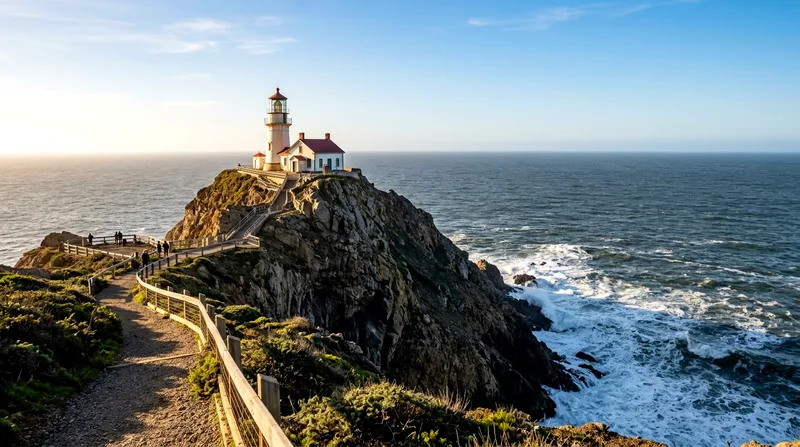
That's the real argument for booking a guided tour rather than renting a car and winging it. A knowledgeable driver-guide can get you to Chimney Rock for wildflowers, the Point Reyes Lighthouse for whale watching, and Bear Valley Visitor Center for trail access, all in one day, without you worrying about one-lane roads or a packed lot at the lighthouse turnoff on a Saturday. For solo travelers, couples without a rental car, and senior travelers who'd rather not navigate fog-bound cliff roads themselves, a guided day trip is usually the smarter buy.
Who Point Reyes Tours Suit Best
Not every visitor to San Francisco needs a guided Point Reyes tour. If you're comfortable driving, have a rental car, and have a full day to spare, self-driving gives you more flexibility to linger at Drakes Beach or detour to Muir Woods on the way back. But for a lot of travelers, that flexibility isn't worth the stress of fog, one-lane roads, and a GPS that doesn't always agree with reality out there.
Nature lovers and wildlife enthusiasts
If you're the kind of traveler who plans trips around migration seasons and birding checklists, Point Reyes rewards a guided approach. The peninsula sees over 490 recorded bird species, more than almost anywhere else on the Pacific coast, thanks to its position as a landfall point for migrating birds. A guide who knows which overlook has had recent tule elk sightings, or which cove the harbor seals favor that week, saves hours of guesswork. Compare this to a Monterey whale-watching boat tour — Point Reyes is a land-based wildlife experience, better for elk, foxes, and shorebirds than for close-up marine encounters, though gray whale migration is visible from the lighthouse overlook in winter.
Senior travelers seeking guided access
Several trails around Bear Valley Visitor Center are flat, wide, and well-maintained — the Earthquake Trail is under a mile and paved — making them realistic for travelers with limited mobility. A senior-friendly Point Reyes tour typically uses a smaller van, builds in rest stops, and avoids the steeper cliff trails near Alamere Falls. Ask specifically about vehicle step height and walking distances before booking; not every "accessible" tour means wheelchair-accessible, and the difference matters if you or a travel companion uses mobility aids.
Types of Point Reyes Day Tours
Tours booked through platforms like Viator or found via TripAdvisor listings generally fall into a handful of categories, and picking the right one matters more than picking a specific company.
Guided wildlife and marine mammal tours
These run as small-group van tours focused on elk at Tomales Point, harbor seals, and — in winter — gray whales spotted from the lighthouse area. Some itineraries combine Point Reyes with a stop at the Marine Mammal Center in Sausalito, which treats injured seals and sea lions and makes a logical add-on since it sits right along the route from San Francisco. Expect four to eight hours total, with binoculars sometimes provided but not guaranteed — ask when booking.
Photography-focused guided experiences
A Point Reyes photography tour typically targets golden-hour light at the lighthouse, long exposures of Chimney Rock's cliffs, and the fog patterns that roll in off the Pacific most afternoons. These tours run smaller groups, often four to eight people, and guides tend to know which overlooks avoid the crowds that gather at the main lighthouse viewpoint. If you're serious about photography, confirm whether the tour times itself around sunrise or sunset — a mid-day tour will get you the landscape but miss the light that makes it worth photographing.
Hiking and trail-based group tours
These skew toward moderate-to-strenuous trails — Tomales Point Trail for elk viewing runs about 9.5 miles round trip, which is a full day's hike on its own, so tour versions usually cover a shorter out-and-back section. Expect a guide who talks ecology and ranching history as much as mileage. These suit fitter travelers more than families with young kids.
Private vs. group tour options
Group tours cost less per person and run on a fixed schedule — good for solo travelers and budget-conscious visitors. Private tours cost considerably more but let you set the pace, skip the stops that don't interest you, and matter more if you're traveling with someone who needs extra time on trails or has a tight photography shot list. For honeymooners or small families, a private van tour often works out better per-person than it sounds once you factor in avoiding a packed group itinerary.
Comparing Tour Categories and Experiences
Choosing between tour types comes down to what you actually want from the day — wildlife, exercise, photos, or just an easy, guided look at the coast.
Wildlife and photography tours suit most first-time visitors, while hiking tours and private charters serve more specific needs.
Point Reyes day trip tour types compared: duration, focus, and who they suit
| Tour Type | Typical Duration | Group Size | Best For | Physical Demand |
|---|---|---|---|---|
| Guided wildlife tour | 6-8 hours | Small group (6-14) | Nature lovers, first-timers | Low to moderate |
| Photography tour | 6-9 hours | Small group (4-8) | Photographers, couples | Low to moderate |
| Hiking trail tour | 5-7 hours | Small group (6-12) | Active travelers, sportsmen | Moderate to strenuous |
| Private guided tour | Flexible, 6-10 hours | 1-6 (your party) | Families, seniors, honeymooners | Customizable |
| Self-drive (no tour) | Full day | N/A | Confident drivers with a car | Variable |
Figures as of 2025; durations and group sizes vary by operator — check current listings before booking.
Wildlife tours vs. hiking tours
Wildlife tours stay close to the van, with short walks to overlooks — ideal if your interest is seeing elk and seals without burning half a day on your feet. Hiking tours trade that comfort for distance, getting you onto trails like the Chimney Rock loop or sections near Palomarin, where you're more likely to spot foxes or raptors away from the main viewpoints. If you want both, look for hybrid itineraries that combine a short nature walk with the main sightseeing stops — these are common but not universal, so read the itinerary description carefully rather than assuming.
Group tours vs. private guided experiences
A shared group tour is the better value if you're flexible on timing and don't mind a set itinerary with seven or eight strangers. Private tours cost more — often two to three times the per-person group rate — but make sense for LGBT couples or honeymooners wanting a quieter day, or for anyone combining Point Reyes with a custom add-on like Muir Woods or the Marin Headlands on the way back into the city. Las Vegas and Los Angeles day-tour markets tend to push private tours harder because distances are longer; around San Francisco, group tours are usually efficient enough that private isn't essential unless you have specific needs.
What to Look for When Booking a Point Reyes Guided Tour
Tour listings on Viator and TripAdvisor can look similar at a glance, but the details that matter are usually buried lower in the description.
Tour inclusions and what's provided
Check whether lunch, park entry (Point Reyes itself has no entrance fee, but some combined itineraries include Muir Woods, which does charge around $15 per adult), binoculars, and hotel pickup are included. Transportation from San Francisco is the main value — driving yourself means dealing with narrow roads like Sir Francis Drake Boulevard, which has no shoulder in places and gets backed up near the lighthouse on weekends.
Group size and accessibility options
Smaller groups — under ten people — generally mean more time at each stop and a guide who can answer individual questions. If you need step-free access or limited walking, message the operator directly before booking rather than relying on the listing alone; "wheelchair accessible" labels on booking platforms aren't always accurate for every stop on a multi-site itinerary.
Cancellation policies and flexibility
Point Reyes weather changes fast — fog can roll in and cancel visibility at the lighthouse with little warning. Look for tours offering free cancellation up to 24 hours before departure, which is standard on most Viator listings, and avoid any tour that doesn't clearly state a weather policy. A tour that won't refund or reschedule for fog-related closures is a bad bet given how common that is on this stretch of coast.
When to Book Your Point Reyes Tour
Timing affects both what you'll see and how easy the tour is to book.
Seasonal wildlife viewing windows
Gray whale migration peaks from roughly late December through April, with a secondary northbound push in spring — this is prime time for lighthouse-based whale watching. Elk rutting season runs July through October, when bulls are most active and visible at Tomales Point. Winter also brings the bulk of migratory bird arrivals. Summer is more reliable for clear skies but busier and foggier along the immediate coast; fall often gives the best combination of clear weather and wildlife activity.
Advance booking recommendations
Book at least one to two weeks ahead for weekend dates in peak whale season (January–March) and during elk rut (September–October), when small-group tours fill fast. Weekday tours in shoulder months like May or November are usually bookable just a few days out. Compare this to booking a Napa Valley wine tour, where weekday availability is almost always open — Point Reyes tours run smaller and fewer per day, so the margin for last-minute booking is thinner.
Frequently asked questions
What wildlife can you see on Point Reyes guided tours?
Tule elk at Tomales Point year-round, harbor seals and sea lions along the coast, gray whales from the lighthouse overlook roughly December through April, and over 490 recorded bird species depending on season. Bobcats and foxes turn up occasionally on quieter trail sections, though sightings aren't guaranteed on any tour.
How far is Point Reyes from San Francisco?
It's about 35 miles, but driving time runs 1 to 1.5 hours each way due to winding roads through the Marin Headlands and rural Marin County. Most guided day tours budget 6 to 9 hours total, including drive time and stops.
Are there senior-friendly guided tours at Point Reyes?
Yes — look for tours centered on Bear Valley Visitor Center and the Earthquake Trail, which is paved and under a mile. Confirm walking distances and vehicle accessibility directly with the operator before booking, since "senior-friendly" labeling varies.
What should I look for when booking a Point Reyes tour?
Check what's included (lunch, pickup, entry fees for any combined stops like Muir Woods), group size, the weather/cancellation policy, and whether the itinerary matches your interest — wildlife, hiking, or photography. Read recent reviews on Viator or TripAdvisor for mentions of fog cancellations or rushed schedules.
When is the best time to visit Point Reyes for wildlife viewing?
Winter (December–April) for gray whales and migratory birds; July–October for tule elk rutting activity. Fall generally offers the best mix of clearer weather and active wildlife, while summer brings more fog along the immediate coastline.