Discover the best Golden Gate Park things to do — museums, gardens, and tours. Book tickets and plan a half-day or full-day itinerary with confidence.
What to Do in Golden Gate Park
Golden Gate Park runs three miles from the Haight to Ocean Beach, covering 1,017 acres — bigger than New York's Central Park. That scale is the first thing to understand before picking Golden Gate Park things to do: nobody sees it all in one visit, and trying to is how people end up exhausted and disappointed. Pick a zone — the museum cluster around the Music Concourse, the western end near the buffalo paddock and Dutch windmills, or the botanical gardens — and build around it.
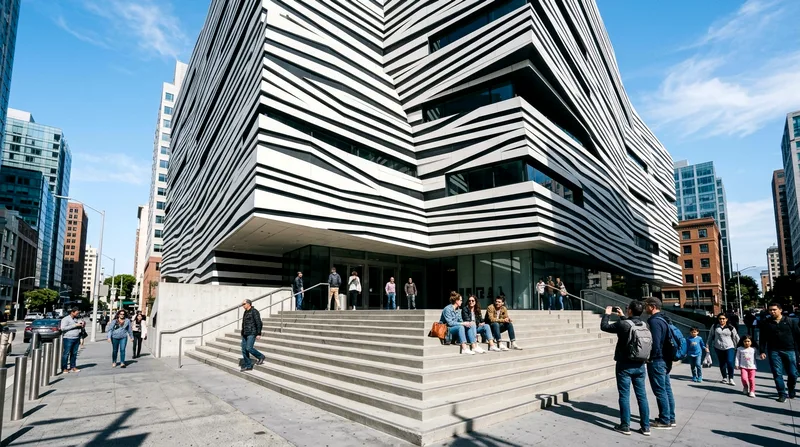
The museum cluster is the park's main draw and the reason most visitors come. The de Young Museum holds American art, textiles, and a photography collection worth an hour on its own, plus a observation tower with a free view over the park's tree canopy — you don't need a ticket just to ride up and look. Directly across the plaza, the California Academy of Sciences packs an aquarium, planetarium, natural history museum, and a living rain forest dome under one living roof. Budget a minimum of three hours there if you have kids; it's dense and interactive enough to eat an entire afternoon.
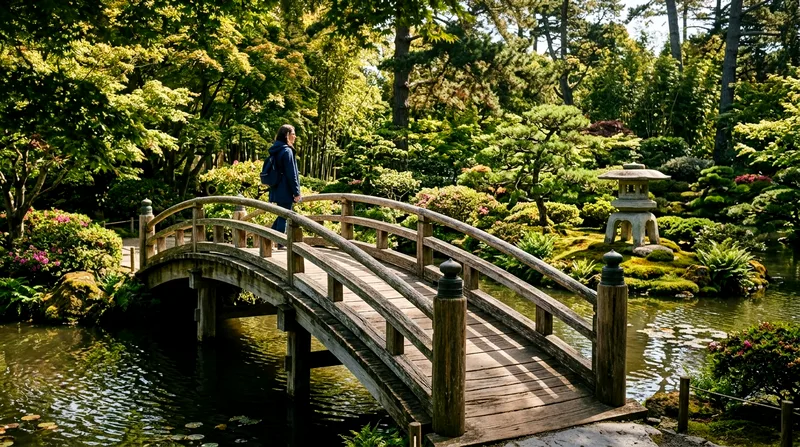
Outside the museums, the park's open space does real work too. Stow Lake lets you rent paddleboats for about an hour, the Japanese Tea Garden (separate small admission) is one of the oldest public Japanese gardens in the US, and the polo fields host casual soccer and frisbee on weekends. I'd skip the bison paddock unless you've got kids who'll find it novel — it's a small enclosure, not a wildlife encounter, and the animals are often resting far from the viewing fence.
Museums and exhibitions
Plan the de Young and the Academy of Sciences as separate half-day commitments, not a combined afternoon — both reward slow visits and rushing either one wastes the entry fee. The de Young's rotating special exhibitions often require a separate timed ticket beyond general admission, so check what's showing before you book. The Academy of Sciences is the better pick for families with children under 12; the de Young suits photographers and couples who want quieter gallery time. Both museums close on Mondays in typical scheduling, so don't build a Monday itinerary around them without checking current hours first.
Gardens and botanical attractions
The San Francisco Botanical Gardens cover 55 acres and charge a modest entry fee for non-residents, with plant collections organized by region — a Chilean cloud forest section and a Mesoamerican cloud forest garden are standouts most visitors skip because they're tucked away from the main paths. The Conservatory of Flowers, the oldest building in the park (1879), is smaller and more photogenic — a single Victorian greenhouse with five galleries of orchids, aquatic plants, and highland flora. If you only have time for one garden, choose the Conservatory for its exterior architecture and the Botanical Gardens for the plant variety; they serve different purposes.
How to Visit: Independent vs. Guided Tours
Most of Golden Gate Park is built for independent visits. The paths are well signed, Google Maps handles navigation fine, and the major attractions each have their own entrance and ticket line — you don't need a guide to find the de Young or figure out where the Tea Garden gate is. For couples, solo travelers, and photographers who want to move at their own pace, self-guided is the better default, and it's free beyond whatever attraction tickets you choose.
Guided tours earn their price in two situations: when you want context you can't get from a placard, or when logistics are genuinely annoying to solve alone. A bike or Segway tour covering the park's western half, including the bison paddock and the Dutch windmills, saves real walking time and usually includes rental gear in the price. Platforms like GetYourGuide and Viator list several of these, typically running two to three hours. For first-time visitors who want the park's history explained — why it was built, why there's a herd of bison in a city park — a walking tour booked through Eventbrite or a local operator adds value a map can't.
Self-guided exploration
Download a park map before you go — cell service gets patchy in the denser wooded sections near the western end. Rent a bike at one of the stands near the park's eastern entrance if you're covering more than the museum cluster; walking the full length from the Haight to Ocean Beach takes over two hours one-way, which eats into time you'd rather spend inside attractions. Self-guided works best if you pre-purchase timed entry for the de Young or Academy of Sciences online, then treat everything else — gardens, lake, trails — as flexible filler around those fixed appointments.
Organized tours and activities
Segway and e-bike tours dominate the bookable options, and for good reason — the park's size punishes anyone on foot trying to see the western half and the museums in one day. Expect group sizes of eight to fifteen people and a guide who stops at the windmills, the buffalo paddock, and a few viewpoints over the ocean. Paddleboat rentals at Stow Lake don't require booking ahead in most cases, but weekend afternoons in summer can mean a 20-30 minute wait. Skip any tour promising to cover the "whole park" in under 90 minutes — that's a drive-by, not a visit.
Tickets, Entry & Booking
Golden Gate Park itself has no entry fee and no gate — it's open city parkland, free to walk, bike, or picnic in at any hour. The costs come from the attractions inside it. De Young Museum tickets, California Academy of Sciences tickets, and Conservatory of Flowers tickets are each sold separately, and each has its own timed-entry system during busy periods, particularly weekends and school holidays. Buy these online in advance rather than hoping to walk up, especially for the Academy of Sciences, which is popular enough with families that same-day tickets can sell out by early afternoon.
The de Young and Academy of Sciences need advance timed tickets, while the park's trails, lake, and several gardens are free and walk-up.
Golden Gate Park attractions compared: time needed, cost level, and booking advice
| Attraction | Typical Time Needed | Cost Level | Advance Booking |
|---|---|---|---|
| de Young Museum | 1.5-2.5 hours | Moderate | Recommended, especially weekends |
| California Academy of Sciences | 3-4 hours | Moderate-High | Strongly recommended |
| Conservatory of Flowers | 45-60 min | Low | Optional, light crowds |
| San Francisco Botanical Gardens | 1.5-2 hours | Low | Optional |
| Japanese Tea Garden | 45 min | Low | Optional |
| Stow Lake paddleboats | 1 hour | Low | Not bookable, walk-up only |
| Park trails, bison paddock, windmills | Flexible | Free | None needed |
Figures as of 2024; ticket prices and hours change seasonally — confirm current details before visiting.
Individual attraction tickets
Each major site — de Young, Academy of Sciences, Conservatory of Flowers, Botanical Gardens, Japanese Tea Garden — sells tickets through its own website, and most are also listed on general booking platforms like Eventbrite. Buying direct from the museum's own site is usually the safer bet for accuracy on current hours and pricing; third-party platforms can lag on schedule changes. San Francisco residents get discounted or free admission to some city-run attractions, including the Botanical Gardens and the Academy of Sciences on certain days — worth checking if you're staying with locals or extending a trip.
Multi-attraction passes
City-wide sightseeing passes sold through platforms like Viator or GetYourGuide sometimes bundle the de Young and Academy of Sciences with attractions elsewhere in San Francisco, such as a bay cruise or the Exploratorium. These make sense only if you're genuinely planning to hit most of the included attractions within the pass's validity window, usually a few consecutive days — otherwise you're paying for access you won't use. Run the math against buying tickets individually before committing; for a visitor focused mainly on the park itself, separate tickets are usually cheaper and simpler.
Best Time to Visit
Fog shapes this park more than any calendar date. The western end near Ocean Beach can sit under cloud while the eastern museum cluster gets full sun, sometimes on the same afternoon — a quirk locals call "the fog line" that shifts day to day. Bring layers regardless of season; San Francisco's summer is often its foggiest stretch, not its warmest.
Seasonal considerations
Spring (March to May) brings the Botanical Gardens' strongest bloom and comfortable walking temperatures in the mid-60s Fahrenheit. Fall (September-October) tends to deliver the clearest, warmest days of the year in San Francisco — a better bet for photographers than the much-hyped summer months. Winter is quieter and wetter, but the museums stay fully operational and lines shrink considerably; if crowds bother you more than rain, this is a legitimate option.
Crowd levels and hours
Weekday mornings, right at opening, are the quietest window at every major attraction — arrive by 9:30 or 10am and you'll beat both tour groups and school trips. Weekends bring the heaviest crowds to the Academy of Sciences specifically, since it's the default rainy-day family outing for the whole Bay Area. The park grounds themselves close at dusk, but individual attractions keep their own hours, typically 9 or 10am to 5pm — check each one separately rather than assuming a shared schedule.
Nearby Add-Ons & Extensions
A half-day plan — 4 to 5 hours — covers one museum plus one garden: say, the Academy of Sciences in the morning and the Conservatory of Flowers after lunch, with a walk through the Music Concourse between them. A full-day plan, 8 hours or more, adds the Botanical Gardens, Stow Lake, and a bike loop out to the windmills and bison paddock near Ocean Beach. Either plan benefits from pairing with what's just outside the park gates.
Adjacent neighborhoods
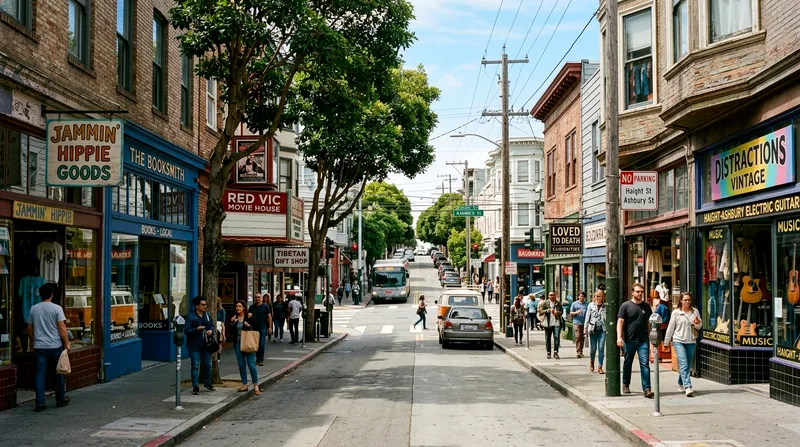
The Haight-Ashbury sits right at the park's eastern edge — a reasonable lunch or coffee stop between museum visits, and worth an hour of wandering for its Victorian houses and record shops if you have the time. The Inner Sunset and Inner Richmond border the park's southern and northern edges respectively, both with better and cheaper food than anything inside the park itself. Richmond in particular has a strong cluster of Asian restaurants worth the ten-minute walk off the park's main paths.
Complementary attractions
Ocean Beach sits directly at the park's western end — a flat, often windy stretch of sand that's better for a walk than a swim, but a natural way to close out a full-day visit. The Golden Gate National Parks Conservancy manages other nearby sites worth bolting onto a longer San Francisco itinerary, including the Presidio and Lands End. Compared with similarly scaled urban parks — Griffith Park in Los Angeles or Balboa Park in San Diego — Golden Gate Park has denser museum content but less wild hiking terrain; if you want rugged trails, save that for Lands End or a day trip to Point Reyes rather than expecting it here.
Frequently asked questions
What are the best things to do in Golden Gate Park?
The de Young Museum and California Academy of Sciences are the headline attractions, followed by the Conservatory of Flowers and San Francisco Botanical Gardens. For a lower-cost visit, Stow Lake paddleboats, the Japanese Tea Garden, and simply walking or biking the park's western half toward the Dutch windmills and bison paddock cover the rest.
How much do Golden Gate Park attractions cost?
The park itself is free. Individual attractions — de Young, Academy of Sciences, Conservatory of Flowers, Botanical Gardens — each charge separate admission, generally in the moderate range for a major city museum, with the Academy of Sciences typically the most expensive given its aquarium and planetarium. Check each attraction's own website for current pricing before booking.
Can I book tours and activities in advance?
Yes. Museum tickets can be booked directly through each institution's website, and bike, Segway, and walking tours are listed on platforms like GetYourGuide, Viator, and Eventbrite. Booking the de Young and Academy of Sciences ahead is particularly important on weekends, when same-day tickets can sell out by early afternoon.
What gardens are worth visiting in Golden Gate Park?
The San Francisco Botanical Gardens offer the widest plant variety across 55 acres, including a Chilean cloud forest section most visitors miss. The Conservatory of Flowers is smaller but architecturally the most striking, housed in the park's oldest building. The Japanese Tea Garden adds a third, distinct option if you have time for all three.
Are there free activities in Golden Gate Park?
Plenty. Walking or biking the trails, visiting the bison paddock and Dutch windmills, viewing the de Young's observation tower, and wandering the Music Concourse all cost nothing. Several city-run attractions also offer free admission days for California or San Francisco residents — worth checking if your trip overlaps with one.