Discover bookable cultural workshops, tea ceremonies, food tastings & guided tours in San Francisco's Japantown. Plan your visit with our complete guide.
What Is Japantown & Why Visit
Japantown — officially the Japantown Historic District, centered on Post Street and Webster Street — is one of only three remaining historic Japantowns in the United States, alongside pockets in Los Angeles and San Jose. It's compact, walkable in under an hour end to end, and dense with things to do that don't show up on a typical cable-car itinerary. If you're deciding between Japantown and, say, a full day in Golden Gate Park, know that Japantown is a two-to-four-hour add-on, not a full-day destination on its own.
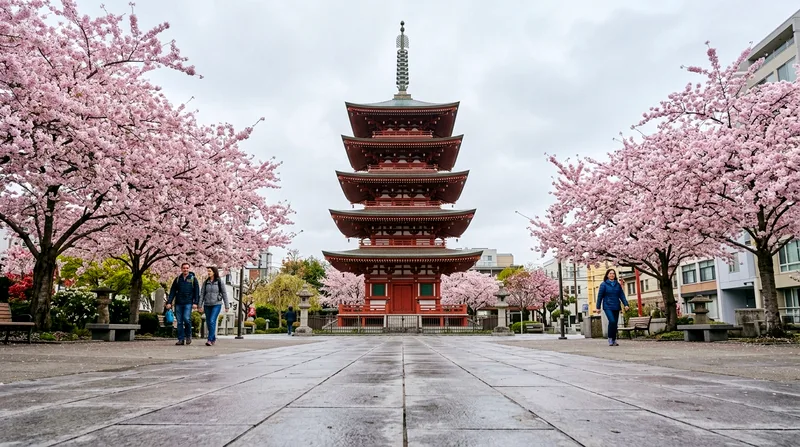
What makes it worth the trip is the mix of everyday neighborhood life and deliberately preserved culture. This isn't a recreated theme district built for tourists — families have run shops here for three generations, and the Peace Pagoda in the Japantown Mall plaza was a gift from Osaka in 1968. For photographers, the five-tiered pagoda against SF fog is a reliable shot any time of day; for couples and honeymooners, the string-lit alleys of Buchanan Street Mall at dusk feel more intimate than Fisherman's Wharf ever will.
Neighborhood History and Cultural Significance
Japanese immigrants settled this area starting in the 1860s, and by the 1930s it supported roughly 30 blocks of Japanese-owned businesses. World War II internment gutted the community overnight — most residents were forced into camps in 1942, and the neighborhood never fully recovered its original footprint. Urban renewal in the 1960s shrank it further, which is why today's Japantown covers roughly six blocks instead of the original 30. Knowing this context changes how you walk it: the Japantown Peace Plaza and the surviving Victorian-era buildings on Sutter Street aren't just backdrop, they're what's left after a deliberate erasure. Several community groups run free or low-cost historical walking talks seasonally — check Eventbrite listings under "Japantown" before your trip, since these aren't always running.
Top Attractions and Landmarks
The Peace Pagoda anchors the plaza and is free to view any time. The Japantown Mall (also called the Japan Center) houses two connected buildings — the Kinokuniya Building and the Miyako Mall — with shops, a bookstore, arcades, and a multiplex. Webster Street Bridge, the pedestrian overpass linking the mall's two halves, is a good five-minute photo stop with torii-style framing. Don't expect Kyoto-level architecture, though — much of the mall dates to 1968 and reads as mid-century concrete rather than traditional Japanese design. If ornate temple architecture is what you're after, you'll be more satisfied at the Asian Art Museum downtown or on a day trip to Monterey's Mission San Carlos, which scratches a different but comparably photogenic itch.
Bookable Cultural Experiences & Workshops
This is where Japantown earns a spot on your itinerary instead of just a drive-by. Rather than passive sightseeing, you can book hands-on sessions — tea ceremonies, calligraphy, ikebana flower arranging, origami, and kimono fitting — many run by small cultural centers or independent instructors rather than big tour operators. Search Eventbrite and TripAdvisor directly for "Japantown San Francisco workshop" closer to your travel dates, since availability shifts seasonally and few of these run on a fixed weekly schedule. The San Francisco Travel Association's official site also lists seasonal cultural programming worth checking before you lock in dates.
Budget 60 to 90 minutes for most workshops, and expect group sizes to stay small — often under 15 people, since many are held in community center rooms rather than commercial studios. That intimacy is the appeal, but it also means they sell out or get cancelled for low signup, so book a few days ahead rather than walking up.
Tea Ceremonies and Traditional Arts
A formal Japanese tea ceremony (chado) is the single best "first cultural experience" in Japantown if you've never done one — it's slow, quiet, and genuinely different from anything else on a typical SF trip. Sessions typically run 45 minutes to an hour and include an explanation of the ritual's history before you actually drink the matcha. Some providers pair it with a short calligraphy or origami add-on in the same booking. If you're traveling with young kids, be honest with yourself: tea ceremony etiquette requires sitting still and quiet, which works better for families with children ten and up than toddlers.
Craft Workshops and Artisan Classes
Beyond tea, look for sessions in sumi-e ink painting, Japanese paper craft, and seasonal kimono or yukata fitting (often timed around the summer Nihonmachi Street Fair). These run as single two-hour sessions rather than multi-day courses, which suits travelers passing through for a few days rather than locals building a skill. Prices for most craft workshops in SF's cultural districts land in the $40–$90 per person range based on materials and session length — always confirm current pricing and group minimums when booking, since instructors sometimes require a minimum headcount to run the class at all.
Food Tours & Culinary Tastings
Food is arguably the strongest reason to book a Japantown visit rather than just pass through. The neighborhood packs in ramen counters, izakayas, mochi shops, and one genuinely unusual stop — the Golden Gate Fortune Cookie Factory nearby in Chinatown gets more tourist traffic, but Japantown has its own small-batch mochi and manju makers worth seeking out on foot. Marufuku Ramen is the most-queued spot in the mall; expect a 20 to 40 minute wait on weekend evenings, which tells you how good the tonkotsu broth actually is. Udon Miguzo is the better bet if you want to sit down immediately and still eat well — thicker noodles, less of a line.
Guided Food Tours and Tastings
Small-group food tours of Japantown typically run two to three hours and stop at four to six venues — a ramen counter, a mochi or sweets shop, a sake or tea tasting, and usually one izakaya-style savory stop. These are worth booking if you want context (why certain noodle shapes pair with certain broths, how mochi-making differs by season) rather than just eating. Compare current listings on Eventbrite and TripAdvisor before committing, since tour frequency in Japantown is lower than in North Beach or Chinatown, where food-tour operators run daily departures. You may need to book 3–5 days ahead rather than same-day.
Cooking Classes and Ramen Experiences
Hands-on cooking classes — making your own ramen broth, folding gyoza, or rolling sushi — exist in Japantown but are less common than tasting tours; most run two to three hours and include a meal of what you make. If you can't find a Japantown-specific class on short notice, San Francisco has broader Japanese cooking workshops elsewhere in the city that are easier to book last-minute. For comparison, Napa Valley's cooking schools are more wine-and-produce focused, so don't expect overlap — Japantown is the place for this particular experience in the Bay Area.
How to Explore Japantown
Most visitors get this wrong by treating Japantown like a mall stop on the way to somewhere else. Give it at least two hours, three if you're eating a sit-down meal, and wear comfortable shoes — Webster and Post Streets slope gently but the surrounding blocks have real San Francisco hills once you wander toward Fillmore Street.
A self-guided walk costs nothing and takes under two hours, while a tea ceremony or food tour adds real cultural depth for roughly $40–$100 per person.
Japantown San Francisco things to do compared: time, cost, and best for
| Experience | Typical Duration | Typical Cost | Booking Needed | Best For |
|---|---|---|---|---|
| Self-guided walk | 1–2 hours | Free (plus food/shopping) | No | Solo travelers, budget-conscious visitors |
| Tea ceremony | 45–60 min | $35–$70 per person | Yes, days ahead | Couples, first-time cultural visitors |
| Craft workshop (origami, sumi-e) | 60–120 min | $40–$90 per person | Yes, days ahead | Families with older kids, photographers |
| Guided walking tour | 90–120 min | $25–$55 per person | Yes, 1–3 days ahead | World travelers, history-focused visitors |
| Food tour | 2–3 hours | $60–$100 per person | Yes, 3–5 days ahead | Food lovers, groups |
| Ramen/cooking class | 2–3 hours | $70–$120 per person | Yes, ahead of time | Couples, honeymooners |
Price ranges reflect typical Bay Area cultural experience rates as of 2024–2025; always confirm current pricing and availability when booking.
Self-Guided Walking Routes
A simple loop works fine without any booking: start at the Peace Plaza, cross the Webster Street Bridge into the mall, browse Kinokuniya Bookstore, exit onto Buchanan Street Mall's pedestrian lane for photos, then walk south toward Fillmore Street for boutique shopping and coffee. This self-guided version costs nothing beyond what you eat or buy, and it's the right call if you're short on time or traveling solo and want flexibility. The trade-off is you'll miss the historical context — plaques exist but are sparse, so read up beforehand or pull up a self-guided audio walk on your phone if one's available through a city tourism app.
Organized Tours and Group Experiences
Guided walking tours, usually 90 minutes to two hours, add the history a plaque can't — internment-era stories, which families rebuilt which businesses, why the footprint shrank. They're worth it for first-time visitors, European and international travelers unfamiliar with Japanese-American history, and anyone traveling with teens who'll actually listen to a good guide. Skip the guided option if you've already done deep reading or you're the type who'd rather wander and eat than stand in a group listening — Japantown is small enough that a guide's value is entirely in the storytelling, not in navigation help.
Best Time to Visit & Nearby Add-ons
Weekday mornings and early afternoons are the calmest times to visit — fewer crowds at Marufuku, easier mall parking, better light for photos through the Peace Plaza. Weekends bring more energy but longer food lines and a fuller plaza, which couples and families might actually prefer for atmosphere. San Francisco fog rolls in most afternoons year-round, so if photography is your priority, aim for late morning light rather than golden hour, which in Japantown often just means grey hour.
Seasonal Events and Festivals
The Northern California Cherry Blossom Festival runs in April and is the single best weekend to be in Japantown — taiko drumming, food stalls, a parade, and crowds thick enough that you should arrive by late morning. The Nihonmachi Street Fair follows in summer (typically August) with a similar but smaller footprint focused more on local vendors and community groups than big-stage performances. Both are free to attend, though food and craft vendors charge individually. If festival crowds aren't your thing, deliberately avoid these weekends — the neighborhood's narrow streets get genuinely packed.
Adjacent Neighborhoods and Attractions
Fillmore Street to the south has jazz history, boutique shopping, and a calmer pace if Japantown's density gets to be too much. The Lower Pacific Heights border adds some of the city's best Victorian architecture within a 10-minute walk. If you're building a broader SF trip, Japantown pairs naturally with a Golden Gate Park afternoon (the park's eastern edge is roughly a 15-minute walk south) or a half-day in Chinatown for contrast — the two neighborhoods make a useful comparison in how differently immigrant communities shaped their respective districts. Travelers coming from Los Angeles will recognize the scale-down version of LA's own Little Tokyo, just denser and older.
Frequently asked questions
What cultural experiences can you book in Japantown San Francisco?
You can book tea ceremonies, calligraphy and ikebana workshops, origami sessions, and seasonal kimono fittings, usually through Eventbrite listings or small cultural centers rather than large tour companies. Most run 45 minutes to two hours and cap group size under 15 people, so book a few days ahead rather than expecting a walk-up slot.
Are there food tours available in Japantown?
Yes — small-group food tours typically run two to three hours with four to six stops covering ramen, mochi or sweets, and a sake or tea tasting. They run less frequently than Chinatown or North Beach food tours, so check Eventbrite or TripAdvisor and book three to five days out rather than same-day.
Is Japantown worth visiting in San Francisco?
It's worth two to four hours if you book at least one hands-on experience — a tea ceremony, workshop, or food tour. Treated as a quick mall walk-through, it's forgettable compared to Fisherman's Wharf or Golden Gate Park; treated as a cultural stop with a booked activity, it's genuinely one of SF's more distinctive neighborhoods.
What is the best time to visit Japantown?
Weekday mornings offer the calmest visit with shorter food lines and easier parking. For atmosphere, visit during the Cherry Blossom Festival in April, but arrive by late morning since crowds build fast in the narrow plaza and streets.
How do you get to Japantown San Francisco?
Japantown sits in the Western Addition near Post and Webster Streets, reachable by Muni bus lines 2, 3, or 38 from downtown in about 15–20 minutes, or a 10-minute drive from Union Square with paid garage parking at the Japan Center. It's roughly a 15-minute walk from the eastern edge of Golden Gate Park if you're combining both in one day.