Compare guided San Francisco kayak tour options by skill level, route, and wildlife. Find the right Golden Gate kayaking trip for your abilities.
Who Each Kayak Tour Type Suits
A San Francisco kayak tour isn't a one-size-fits-all outing, and the operators who run trips here generally sort people into three rough tiers before anyone touches a paddle. That sorting matters more in San Francisco Bay than it would in, say, a protected harbor in San Diego or a calm inlet near Seattle — this water moves, and tour companies size up your experience partly for their liability and partly for your safety.
Expect a short conversation or waiver questionnaire at check-in asking about prior kayaking experience, swimming ability, and comfort in cold water. That's not bureaucracy for its own sake; it determines whether you get routed toward a sheltered cove paddle or a bridge crossing.
Beginners and families
If you've never kayaked or only done it on a lake, start with a guided tour based in a calmer stretch of the Bay — Sausalito's waterfront or the protected water near Angel Island's east side are the usual choices. These trips run roughly 2 to 3 hours, launch from a beach rather than a dock, and spend the first 20–30 minutes on basic strokes and capsize drills in shallow water before heading out. Tandem kayaks are common here and a smart choice for a parent paddling with a child, since they're more stable and let an adult correct course without the kid doing much work. I wouldn't put children under about 8 in a solo kayak on the Bay — the wake from ferries and the wind across open stretches can rattle even confident adults.
Intermediate paddlers
If you've kayaked a handful of times and can self-rescue or at least wet-exit calmly, you're the target customer for the classic Golden Gate Bridge paddle. These tours typically run 3 to 4 hours round trip from a launch point near Fort Baker or Sausalito, timed tightly around tidal windows (more on that below). You'll paddle in a group with a guide front and back, and the pace assumes you can maintain a steady stroke for an hour or more without stopping. This is the tier where most visiting travelers land — people who've paddled on vacation before in Lake Tahoe or coastal Oregon but aren't regular paddlers at home.
Advanced kayakers and wildlife enthusiasts
Experienced paddlers — the kind who might belong to a club like Bay Area Sea Kayakers — often skip commercial guided tours altogether and rent or bring their own boats for longer routes around the Marin Headlands or out toward Alcatraz Island's exclusion zone (you can't land there, but you can paddle near it with the right permits and caution). If this is you, look for a tour or rental outfit that will let advanced paddlers go with a smaller guide ratio or a looser itinerary. Wildlife-focused trips, often timed for early morning when the water is glassier, suit this group well since a steadier paddler can hold position near harbor seals without drifting into them.
Guided vs. Self-Guided Kayak Tours
This is the real fork in the road when booking a San Francisco kayak tour, and it's worth more thought than most people give it. A guided tour costs more but includes instruction, a planned route that accounts for tides, and someone on the water who knows what the current is doing right now, not what a tide chart predicted this morning.
Safety and instruction benefits
San Francisco Bay has real hazards that don't exist on most recreational paddling water: strong tidal currents through the Golden Gate strait, cold water (consistently in the 50s°F year-round, cold enough to cause disorientation fast if you go in unexpectedly), heavy boat traffic including ferries and container ships, and fog that can roll in within 20 minutes and cut visibility to almost nothing. A guided trip handles this by routing around shipping lanes, choosing launch times tied to tidal slack windows, and carrying safety gear — VHF radios, tow lines, sometimes a support boat — that a casual renter won't have. If you're newer to open water, this alone justifies the cost difference.
Cost and flexibility comparison
Self-guided rentals are cheaper and more flexible on timing — you show up, get fitted for a boat, and go when you want within the rental window. Guided tours lock you into a set departure time and group pace, which can be frustrating if you're the stronger paddler in the group waiting for others. But rentals put the tidal and navigational judgment entirely on you, and most rental counters in Sausalito or near Fisherman's Wharf won't let first-timers take a boat anywhere near the Golden Gate strait itself — they'll restrict you to the calmer marina water. If paddling under the bridge is the point of your trip, a guided tour is usually the only realistic way to do it safely and legally with a rental outfit's blessing.
Top San Francisco Kayaking Routes
Route choice shapes everything else about your trip — duration, difficulty, and what you'll see. Three types of routes dominate the San Francisco Bay kayaking scene, and they don't overlap much in who they suit.
Golden Gate Bridge paddles
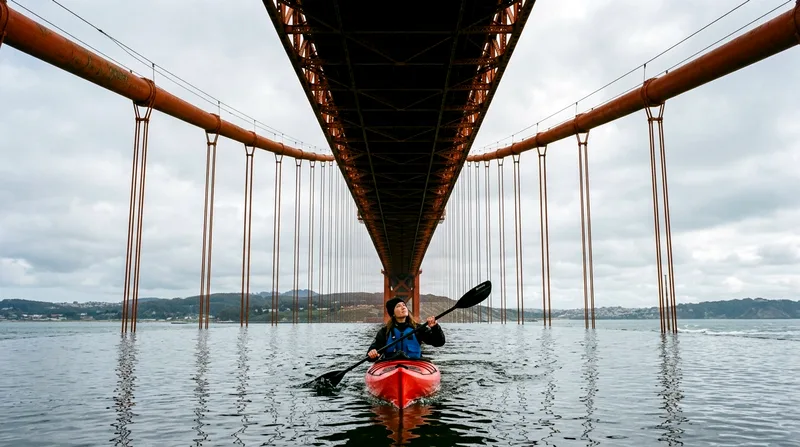
The signature route, and the one most people searching for a San Francisco kayak tour actually want, runs from a Marin-side launch (usually near Sausalito or Fort Baker) out toward the bridge and back, timed to catch a slack or favorable tide. Expect 3 to 4 hours total, with maybe 45 minutes of that spent actually under and around the bridge structure — the rest is transit paddling. The light is best in mid-morning before afternoon wind picks up, and photographers should know the bridge's north tower is usually in shadow until later in the day depending on season.
Angel Island and Sausalito routes
A longer, calmer alternative circles part of Angel Island or hugs the Sausalito shoreline, running 3 to 5 hours depending on whether lunch or a beach stop is included. This route trades bridge views for more wildlife and less current fighting, and it's the better pick for anyone unsure about their stamina or nervous about open-water crossings. It's also more forgiving if the forecast is marginal — guides can shorten or reroute a Sausalito paddle far more easily than one committed to a Golden Gate crossing.
Wildlife spotting locations
Harbor seals haul out reliably near Angel Island and along parts of the Marin Headlands coastline, and sea lions are a near-guarantee anywhere close to the piers and rock outcroppings on the north side of the Bay. Brown pelicans, cormorants, and the occasional harbor porpoise round out what you might see. Wildlife kayaking San Francisco trips tend to run slower and shorter — around 2.5 hours — prioritizing quiet drifting over distance covered, so don't book one of these if you actually want the bridge-crossing workout.
What to Look for When Booking
Once you know your skill tier and preferred route, the booking details separate a good trip from a miserable one. Platforms like GetYourGuide, Viator, and TripAdvisor list most of the guided options operating out of Sausalito and the Marin side, and reading recent reviews on those sites — not just the star rating, but what reviewers say about group size and weather calls — tells you more than the listing description.
Beginner-friendly Sausalito and Angel Island routes trade bridge views for calmer water, while Golden Gate crossings demand prior paddling experience and tighter tidal timing.
San Francisco kayak tour types compared by skill level, route, and wildlife potential
| Tour Type | Skill Level | Typical Duration | Route Difficulty | Wildlife Potential | Key Booking Factor |
|---|---|---|---|---|---|
| Sausalito shoreline (beginner) | None required | 2-3 hours | Easy, sheltered | Moderate (seals, birds) | Tandem kayak availability |
| Angel Island loop | Beginner-Intermediate | 3-5 hours | Easy-Moderate | High (seals, pelicans) | Lunch/beach stop included |
| Golden Gate Bridge crossing | Intermediate+ | 3-4 hours | Moderate-Hard, tidal currents | Low-Moderate | Tidal timing, guide ratio |
| Wildlife-focused paddle | Beginner-Intermediate | 2-2.5 hours | Easy | Highest (seals, porpoise sightings) | Slow pace, photo stops |
| Self-guided rental (marina only) | Beginner-Intermediate | 1-2 hours | Easy, restricted zone | Low | No bridge access typically allowed |
| Advanced/club paddle (Marin Headlands) | Advanced | 4+ hours | Hard, open water | Moderate | Smaller guide ratio or none |
Figures reflect typical, well-established operating patterns as of 2024; exact durations and tidal timing vary by day and operator.
Group size and instructor ratios
Look for a stated guide-to-guest ratio, ideally no more than 1 guide per 6-8 paddlers for beginner routes, tighter for anything near the Golden Gate strait. Listings that don't mention group size at all are a minor red flag — it usually means the operator fills the boat as full as possible. A tour capped at 8-10 total guests is going to feel noticeably more personal and safer than one with 20 kayaks strung out across open water.
Equipment quality and inclusions
A proper SF Bay kayak tour should include a wetsuit or splash gear (the water's cold enough that cotton clothing alone is a bad idea), a spray skirt, a PFD, and a dry bag for phones and cameras. Some trips include a light snack or coffee afterward; few include a full meal. If a listing doesn't specify wetsuit inclusion, ask before booking — renting one separately can add a meaningful amount to your day, and showing up in shorts for a 50-something-degree paddle is a rough way to start.
Cancellation and weather policies
Fog and wind cancel or reroute Bay kayak tours more often than visitors expect, especially in summer afternoons when the thermal wind through the Golden Gate strait can hit 20-25 mph. Check the cancellation policy before paying — a free reschedule or refund for operator-called weather cancellations is standard and should be non-negotiable. Be wary of any listing that doesn't mention a weather policy at all, since that usually means you're out of luck if the guide cancels the morning of your trip.
Best Time to Book Your Tour
The best time kayak SF Bay trips run is a narrower window than most visitors assume, and it's shaped by both season and time of day rather than season alone. Late summer and early fall — roughly August through October — tend to have the least fog and calmer winds, which is also peak tourist season generally in San Francisco, so book routes near the bridge at least a week or two ahead during that stretch. Spring can be beautiful but windier, and winter brings rain and shorter daylight, though storm-free winter mornings can actually be some of the calmest, clearest paddling of the year if you're flexible and watching the forecast.
Within a given day, morning departures before 11am consistently have calmer water than afternoon ones, because the Bay's thermal wind pattern builds through the day and often peaks between 2pm and 5pm. If you only take one piece of scheduling advice from this page, make it that: book the earliest guided departure your tour offers, especially for a Golden Gate Bridge route. Compare current kayak tour listings and prices before you book, since availability and seasonal schedules shift and the live booking data will reflect what's actually running that week.
Frequently asked questions
What skill level is required for San Francisco kayak tours?
Beginner routes near Sausalito or Angel Island require no prior experience — guides teach basic strokes on-site. A Golden Gate Bridge crossing generally expects some paddling background and comfort with choppy, moving water, since tours move at a steady pace through tidal currents rather than stopping to teach fundamentals mid-route.
What wildlife can you see on SF Bay kayak tours?
Harbor seals and sea lions are the most reliable sightings, especially near Angel Island and the rocky stretches of the Marin Headlands. Pelicans and cormorants are common year-round, and occasional harbor porpoise sightings happen in calmer, early-morning conditions. Wildlife-focused tours deliberately slow down and drift near known haul-out spots to maximize these encounters.
How much does a guided kayak tour in San Francisco cost?
Prices vary by route, duration, and season, and change often enough that quoting a fixed number here would be misleading — check current listings on platforms like GetYourGuide, Viator, or TripAdvisor for live pricing. As a general pattern, shorter sheltered-water tours cost less than longer Golden Gate Bridge crossings that include more gear and a tighter guide ratio.
Are kayak tours safe in San Francisco Bay?
Guided tours are reasonably safe because operators plan around tides, carry safety equipment, and cancel or reroute in poor conditions. The Bay itself isn't inherently safe for casual paddling — cold water, strong currents near the Golden Gate strait, and heavy ferry traffic are real risks, which is exactly why unguided beginners are typically restricted to marina water.
What is the best time to book a kayak tour in SF?
Late summer through early fall (roughly August to October) tends to have the calmest, least foggy conditions for bridge routes. Within any day, book the earliest morning departure available — afternoon thermal winds through the Golden Gate strait routinely pick up by early-to-mid afternoon and make paddling noticeably harder.