Compare San Francisco bay cruise options by duration, route, and inclusions. A clear guide to picking the right boat tour before you book.
Who Each Bay Cruise Type Suits
A San Francisco bay cruise isn't a single product — it's a category that spans a 45-minute bridge loop and a four-hour dinner excursion to Sausalito. Before you look at prices, figure out what you actually want from the water: a photo of the Golden Gate from below, a sunset with wine in hand, or a slower look at the Bay Area shoreline from Tiburon to Angel Island. That decision matters more than which dock you leave from.
Most bay cruises depart from Fisherman's Wharf or Pier 33, near the Alcatraz ferry terminal, which makes bundling a cruise with an Alcatraz tour logistically easy but can also mean long lines and crowded piers in July and August. If you're traveling with young kids or have mobility limitations, shorter cruises under 90 minutes are almost always the safer bet — less time exposed to wind and chop, less time for a toddler to get restless.
Short sightseeing cruises for first-time visitors
If this is your first trip to San Francisco and you have a single afternoon free, a standard 60- to 75-minute bay tour covering the Golden Gate Bridge and a pass by Alcatraz Island is the efficient choice. These run frequently — often multiple departures per day — and use live or recorded narration pointing out Angel Island, Sausalito, and the old military forts along the headlands. They're not romantic and they're not quiet, but they get you the photo and the context in under two hours.
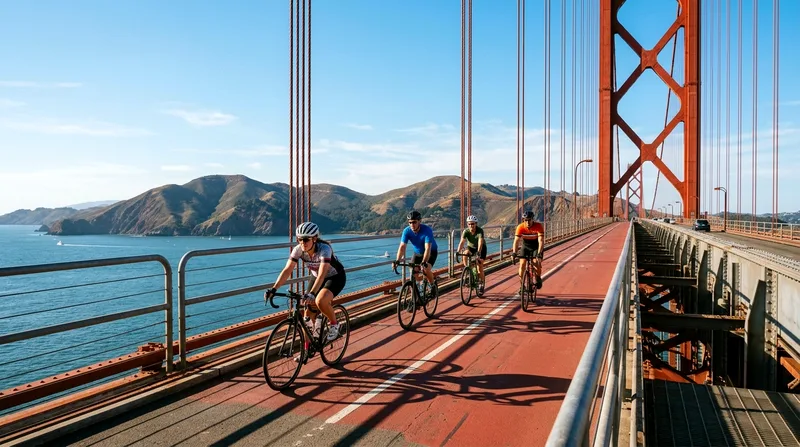
Compare this to simply walking or biking across the Golden Gate Bridge itself, which costs nothing and gives a different, more physical perspective — but you don't get the view of the bridge from the water, which is the whole point of a cruise. For a first visit, I'd still rank the short cruise above renting a bike unless you're already a confident rider.
Specialty tours for food, wine, and photography enthusiasts
Wine-focused and dinner cruises typically run two to three hours, departing in late afternoon to catch the sunset over the bay, and include a seated or buffet meal with Northern California wine pairings — often from Napa or Sonoma producers, since actual Napa Valley is inaccessible by boat from San Francisco. These suit couples and honeymooners who want an event, not just transportation with a view.
Photographers should think differently: the best light for shooting the Golden Gate Bridge is usually the hour before sunset or shortly after sunrise, which rules out most mid-day sightseeing slots. A handful of operators offer early evening or "golden hour" departures aimed at photographers and couples rather than large tour groups — worth seeking out specifically rather than booking whatever's available at 2pm.
Main Bay Cruise Categories Compared
Bay cruises break down into four broad categories: short sightseeing loops, sunset or dinner cruises, extended excursions to Sausalito or Tiburon, and private charters. Each has a distinct duration range, route, and price tier, and conflating them is the most common booking mistake I see people make — buying a short loop ticket expecting a meal, or booking a long Sausalito round-trip when they only wanted bridge photos.
Duration and route differences
Short sightseeing cruises run 45 to 75 minutes and loop from the Wharf area out past the Golden Gate Bridge and back, sometimes swinging near Alcatraz Island without stopping. Sunset cruises extend to two or three hours and usually add a wider loop through the central bay, sometimes toward the Bay Bridge, timed to catch the skyline lighting up. The longest standard option is a round-trip to Sausalito or Tiburon, which can run three to five hours including dock time — some of these let you disembark in Sausalito, have lunch, and catch a later boat back, functioning more like a ferry-plus-tour hybrid than a pure cruise.
Don't confuse these longer bay excursions with the regular Golden Gate Ferry or Blue & Gold ferry services to Sausalito, which are commuter ferries with no narration and a fraction of the price — a legitimate budget alternative if you just want to get across the bay and back without commentary.
Group versus private cruise options
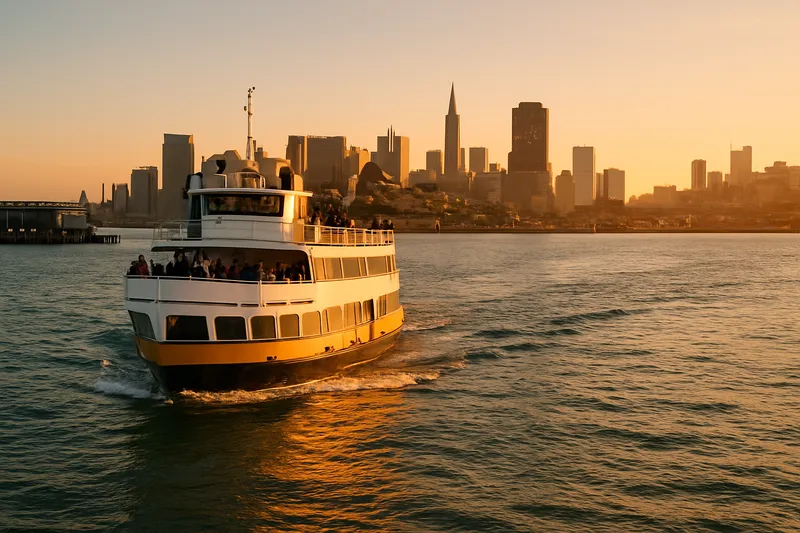
Standard group cruises carry anywhere from 50 to over 150 passengers on multi-deck boats, with open-air upper decks and enclosed, heated lower cabins — useful given how cold and windy the bay gets even in July. Private charters, by contrast, typically hold anywhere from 6 to 50 guests depending on the vessel, and are booked for proposals, weddings, or corporate events rather than casual sightseeing.
The trade-off is straightforward: group cruises cost far less per person and run on fixed schedules, so you're locked into a specific departure time with a few hundred strangers. Private charters give you route flexibility and privacy but require booking well in advance and cost dramatically more per head unless you're filling the boat with a group of 15 or 20. For a couple celebrating an anniversary, a semi-private or small-boat sunset option is often a better value than a full charter.
What to Look for When Booking
Ticket listings for San Francisco harbor cruise tickets can look nearly identical until you read the fine print. The details that actually affect your experience are rarely in the headline price.
Inclusions, group size, and cancellation policies
Check whether the ticket includes a drink, snack, or full meal — many sightseeing cruises include nothing beyond the ride and narration, while sunset and dinner cruises bundle food but may charge extra for alcohol. Look at stated capacity versus the boat's size; a cruise advertised as "intimate" that still carries 100 passengers isn't intimate. Cancellation policies vary widely — some allow free changes up to 24 hours out, others are non-refundable once booked, which matters given how often San Francisco fog cancels or delays sailings with little warning. Always check current prices and cancellation terms when booking, since these change by season and operator.
Onboard amenities and live commentary quality
Live commentary from a crew member tends to be more engaging and responsive to conditions — pointing out a seal colony or a container ship in real time — than a looped recording playing in six languages. If multilingual narration matters for your group, confirm it's live-translated or available via headset rather than just advertised generically. Amenities worth checking: heated indoor seating (genuinely necessary, not a luxury, given bay wind), a snack bar versus BYO policy, and restroom access, which smaller boats sometimes lack entirely.
When to Book Your Bay Cruise
Timing affects both price and whether you'll actually see anything once you're out on the water.
Seasonal availability and weather considerations
San Francisco's fog season peaks from June through August, often rolling in by mid-afternoon and obscuring the upper towers of the Golden Gate Bridge for hours at a time. Counterintuitively, September and October tend to offer the clearest, warmest conditions for bay cruising — locals call it the city's real summer. Winter cruises (December through February) run less frequently and can be choppier, but you'll get smaller crowds and occasionally dramatic storm-light photography if you're willing to bundle up.
Advance booking discounts and peak season timing
Peak season (June through August, plus major holidays) sees cruises sell out days in advance, particularly sunset and dinner departures on weekends. Booking one to two weeks ahead is reasonable for summer weekday cruises; for weekend sunset slots in July, two to three weeks ahead is safer. Shoulder season (April-May, September-October) usually allows booking just a few days out. Always compare current prices and available departure times before booking, since schedules shift seasonally and operators adjust frequency based on demand.
Bay Cruise Comparison Table
Here's how the main categories stack up against each other on the factors that actually drive a booking decision — duration, route, group size, and who they suit best.
Short sightseeing loops suit first-time visitors on a tight schedule, while sunset and Sausalito cruises reward travelers with a free evening and more budget.
San Francisco bay cruise types compared: duration, route, and group size
| Cruise Type | Duration | Typical Route | Group Size | Best For |
|---|---|---|---|---|
| Short sightseeing loop | 45-75 min | Golden Gate Bridge, pass near Alcatraz | 50-150+ | First-time visitors, families, tight schedules |
| Sunset cruise | 90 min-2.5 hrs | Central bay, bridge, skyline at dusk | 50-120 | Couples, honeymooners, photographers |
| Dinner cruise | 2-3 hrs | Central bay with seated meal service | 50-150 | Special occasions, anniversaries |
| Sausalito/Tiburon excursion | 3-5 hrs (incl. dock time) | Round-trip across bay with onshore stop | 50-120 | Longer visits, wine lovers, slower pace |
| Commuter ferry (no narration) | 30-60 min one-way | Fisherman's Wharf to Sausalito/Tiburon | 100-300 | Budget travelers, solo travelers |
| Private charter | Flexible, 2-4 hrs typical | Customizable | 6-50 | Groups, weddings, proposals |
Figures as of 2025; durations and capacities vary by vessel and operator, so confirm specifics before booking.
Frequently asked questions
What is the best San Francisco Bay cruise for first-time visitors?
A 60- to 75-minute sightseeing loop departing from Fisherman's Wharf or Pier 33 is the most efficient choice. It covers the Golden Gate Bridge and a view of Alcatraz Island without eating up half your day, and most run frequent daily departures so you're not locked into booking weeks ahead outside of peak summer weekends.
How long do San Francisco Bay cruises typically last?
Standard sightseeing cruises run 45 to 75 minutes. Sunset cruises extend to roughly 90 minutes to 2.5 hours, dinner cruises run 2 to 3 hours, and full excursions to Sausalito or Tiburon — including any onshore time — can take 3 to 5 hours round trip.
What is included in a bay cruise ticket?
At minimum, a seat on the boat and narrated or recorded commentary about the Golden Gate Bridge, Alcatraz, and the surrounding bay. Sunset and dinner cruises typically add food and sometimes a drink, but alcohol is often extra. Always read the listing closely — "includes refreshments" can mean anything from a bottle of water to a full buffet.
When is the best time to book a bay cruise?
For clearer skies, aim for September or October rather than peak-summer June through August, when afternoon fog is common. For availability, book one to two weeks ahead for summer weekday cruises and two to three weeks ahead for weekend sunset or dinner cruises in July and August.
Are bay cruises family-friendly and accessible?
Most standard sightseeing cruises welcome children and offer heated indoor cabins, which matter given how cold the bay gets even in summer. Wheelchair accessibility varies by vessel — some boats have step-free boarding and accessible restrooms, others don't — so check the specific boat's accessibility details before booking rather than assuming.