Explore San Francisco by bike with guided tours across Golden Gate Bridge, Sausalito & beyond. Compare routes by fitness level, scenery & photo stops.
Who Each Tour Type Suits Best
San Francisco bike tours aren't one thing — they range from a flat 45-minute waterfront cruise to a six-hour push into the Marin Headlands with 800 feet of climbing. The right choice depends less on how much you want to see and more on how your knees feel about hills, and whether you'd rather follow a guide or wander on your own schedule.
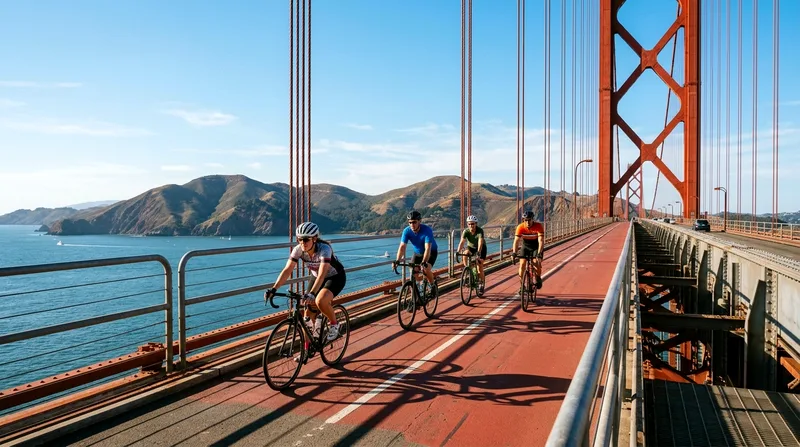
The classic route — from Fisherman's Wharf, across the Golden Gate Bridge, down into Sausalito, with a ferry back — is the one almost every operator on GetYourGuide, Viator, or TripAdvisor sells in some form. It's popular for good reason: mostly flat or gently downhill, scenic the entire way, and it ends with a boat ride instead of a climb back up. But "popular" doesn't mean "easy for everyone," and the bridge sidewalk gets crowded with pedestrians and other cyclists by midday, which matters if you're nervous on two wheels.
Fitness levels and route difficulty
If you haven't ridden a bike in years, stick to the Wharf-to-Sausalito route on a standard bike, or better, an e-bike — it's flat to rolling, with the only real effort being the bridge's gradual incline and a short, sharp climb just past the bridge's north end before the Sausalito descent. That one hill trips up more beginners than the bridge itself does.
For anyone wanting more distance, tours that continue past Sausalito toward Muir Woods or deeper into Marin County add real elevation — think switchbacks and sustained climbs that leave standard-bike riders breathing hard. These suit confident, regularly active cyclists. Seniors and families with children under 10 should default to the shorter loop; the longer Marin County add-ons are better suited to sportsmen and fitness-focused travelers who want the burn as part of the experience.
Group size and experience preferences
Group tours typically run 8 to 15 riders with one or two guides, and they're cheaper per person, more social, and useful if you want someone handling navigation and bridge traffic etiquette. Private and small-group tours (2-6 people) cost more but let couples, honeymooners, and photographers set their own pace — crucial if you want to linger at the Vista Point overlook for pictures instead of being hurried along by a schedule built for the slowest rider in a group of strangers. Solo travelers often do fine joining a group tour; it's an easy way to meet other travelers without the awkwardness of a silent self-guided ride.
Tour Categories: Guided vs Self-Guided
Guided tours come with a leader, a fixed route, and built-in stories about the bridge's construction, the fog patterns, and why Sausalito looks the way it does. Self-guided rentals give you a bike, sometimes a map or GPS unit, and total freedom — you set the pace, skip what bores you, and stay as long as you like at any overlook. Neither is objectively better; it's a trade between structure and flexibility.
I'd steer first-time visitors unfamiliar with San Francisco traffic patterns toward guided. The city's bike lanes near Fisherman's Wharf are decent, but navigation gets confusing around Fort Mason and the bridge's pedestrian-vs-cyclist lane split changes depending on the day and season. A guide who rides it daily avoids the wrong-turn detours that eat 20 minutes and your patience.
Golden Gate Bridge and waterfront routes
The core route hugs the waterfront from Fisherman's Wharf past Fort Mason and Crissy Field, with Alcatraz Island visible across the bay for most of the first 30 minutes. This stretch is flat, paved, and shared with walkers and joggers, so expect to slow down on weekends. The bridge crossing itself takes most riders 20 to 30 minutes depending on pedestrian congestion and wind — and the wind is the real variable. Afternoon gusts across the bridge deck can be strong enough to wobble an unloaded standard bike, which is one more argument for the stability of an e-bike's extra weight.
Neighborhood and Sausalito day trips
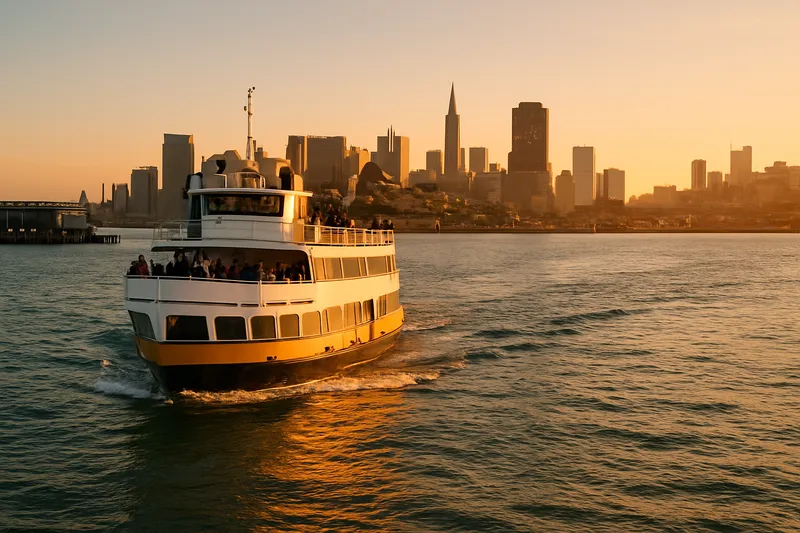
Beyond the bridge, Sausalito itself is worth the 20-minute downhill coast in — a low-key harbor town with cafés and houseboats, and the standard turnaround point before the ferry back to the Ferry Building or Pier 41. Some operators extend the day with a loop through Marin County toward Tiburon, or a branch route toward Muir Woods for travelers wanting redwoods added to the bay views. These extended trips run 5 to 6 hours total versus roughly 3 to 4 for the standard bridge-and-Sausalito loop, and they typically aren't included in the base tour price — confirm what's covered before assuming Muir Woods is part of the package.
Standard Bikes vs E-Bikes Compared
This is the decision that affects your day more than any route choice. Standard bikes are lighter, cheaper to rent, and give you a workout — fine if you're already fit and want exercise built into your sightseeing. E-bikes add a motor assist that flattens hills, cuts the bridge's incline down to a non-event, and lets slower riders keep pace with a group without arriving everywhere sweaty and last.
E-bike rentals in San Francisco typically cost somewhat more than standard bikes — expect a noticeable premium on tour pricing, though the exact gap varies by operator, so compare current prices when booking rather than assuming a fixed markup. What you get for that difference: less fatigue, faster average speed, and the ability to do the longer Marin County extensions without destroying your legs for the rest of the trip.
An e-bike on the Golden Gate Bridge-to-Sausalito loop is the easiest, most reliable option for mixed-fitness groups, while standard-bike Marin County extensions suit fit, experienced cyclists wanting more challenge.
San Francisco bike tour types compared: route, bike, and difficulty
| Tour Type | Typical Duration | Bike Type | Difficulty | Best For |
|---|---|---|---|---|
| Guided Wharf-to-Sausalito loop | 3-4 hours | Standard or e-bike | Easy-Moderate | First-timers, families, couples |
| Self-guided bridge crossing | 2-3 hours | Standard or e-bike | Easy-Moderate | Independent travelers, budget-conscious |
| Private/small-group bridge tour | 3-4 hours | Standard or e-bike | Easy-Moderate | Honeymooners, photographers, seniors |
| Marin County/Muir Woods extension | 5-6 hours | Standard bike preferred | Moderate-Hard | Fit cyclists, sportsmen |
| E-bike full loop with ferry return | 3-4 hours | E-bike | Easy | Mixed-fitness groups, limited time |
Durations and difficulty levels as of 2024; actual duration varies with group pace, stops, and ferry schedule. Check current prices and schedules when booking.
Cost, effort and scenic photo stops
Photo stops matter more than people expect, and fatigue ruins photos — a shaky hand after a hard climb doesn't capture the bridge towers well. The best stops are predictable: the Vista Point pullout just past the bridge's north tower, the Sausalito waterfront with boats and the ferry dock in frame, and the Fisherman's Wharf stretch where Alcatraz sits offshore. E-bike riders arrive at each stop less winded and more willing to wait the extra five minutes for good light, which photographers and honeymooners chasing a decent couple's shot will appreciate.
Best for different fitness levels
Choose standard bikes if you're already a regular cyclist, want exercise, or are traveling on a tighter budget and the modest rental savings matter. Choose e-bikes for families with kids riding tandem or trailer setups, senior travelers, anyone recovering from injury, or groups with mixed fitness levels where you don't want the strongest rider waiting at every hill for the rest.
What to Look for When Booking
Read past the star rating on GetYourGuide, Viator, or TripAdvisor and check what recent reviewers say about group size on the day they rode, not just the advertised maximum. A listing claiming "small groups" that regularly runs 20 riders in July is a real complaint pattern worth noticing before you book.
Inclusions, group size and cancellation
Confirm whether the ferry ticket back from Sausalito is included — this trips up a lot of travelers who assume it is, then get hit with an extra cost at the dock. Also check the cancellation policy: most reputable operators offer free cancellation up to 24 hours ahead, which matters in a city where fog and wind can make an early-morning ride miserable. Group size should be stated as an actual cap, not "small groups" with no number attached.
Safety gear and equipment provided
Helmets should be included and mandatory — walk away from any listing vague about this. Good operators also provide a phone mount or basic bike lock for stops in Sausalito, since bike theft isn't rare in a town full of parked rental bikes. Ask whether bikes are sized to riders before the tour starts or handed out first-come; an ill-fitting bike on a multi-hour ride is a miserable, avoidable problem.
Best Time to Book Your Tour
San Francisco's fog season runs roughly May through August, when mornings can be cold and visibility over the bridge drops noticeably before burning off by early afternoon. Booking an early-morning departure sounds appealing for fewer crowds, but it also means a higher chance of riding through fog with the bridge towers barely visible — not ideal if photos are the priority. Late morning starts, around 10 or 11 a.m., tend to balance crowd levels against decent visibility.
September and October usually bring the city's clearest, warmest weather, and it's a smart window if your schedule allows it — less fog, fewer summer crowds, and Sausalito's outdoor cafés still fully open. Compare that to winter, when rain is more likely and some operators reduce tour frequency; book a late-morning slot and check the forecast rather than committing to a fixed date months out if your itinerary allows flexibility.
For high season (June through August), book your bike tour at least a week ahead, especially for small-group or e-bike options, which sell out faster than standard-bike group tours. In shoulder season you can often book two or three days out. Either way, compare current prices and recent reviews before you commit — availability and pricing shift by season and by operator.
Frequently asked questions
What is the best fitness level for San Francisco bike tours?
A moderate fitness level — comfortable walking briskly for an hour — is enough for the standard Golden Gate Bridge-to-Sausalito loop, especially on an e-bike. The bridge grade is gradual, not steep. Reserve a "good fitness" rating for Marin County or Muir Woods extensions, which add real climbing and suit people who already cycle or hike regularly.
How long does a Golden Gate Bridge bike tour take?
The bridge crossing alone takes 20 to 30 minutes each way depending on pedestrian traffic and wind. A full guided loop from Fisherman's Wharf through Sausalito and back by ferry typically runs 3 to 4 hours including stops for photos and a break in Sausalito. Add 1 to 2 hours if the tour extends toward Marin County or Muir Woods.
Are electric bikes worth it for San Francisco tours?
Yes, for most riders. The modest extra rental cost buys an easier bridge crossing, less fatigue on hills near Sausalito, and the ability to keep pace with a group without arriving exhausted. Skip the e-bike only if you're already a fit, regular cyclist who wants the exercise as part of the trip.
What should I bring on a guided bike tour?
Layered clothing is essential — mornings near the bridge run 10-15°F cooler and windier than downtown. Bring a light jacket, sunglasses, sunscreen, and a phone or camera with a wrist strap for photo stops. Closed-toe shoes are required by most operators; sandals usually aren't allowed on rental bikes.
Can I do a self-guided bike tour instead of guided?
Yes, and it's a reasonable choice if you're confident navigating with a map or phone GPS and want flexibility on timing. You'll miss the narration about the bridge and Sausalito's history, and you're on your own if you take a wrong turn near Fort Mason, but you'll save money and can linger as long as you like at any viewpoint.