Explore Castro District walking tours covering LGBTQ+ history, landmarks & culture. Compare guided options, pricing, and what to expect before you book.
What Is the Castro District & Why Visit
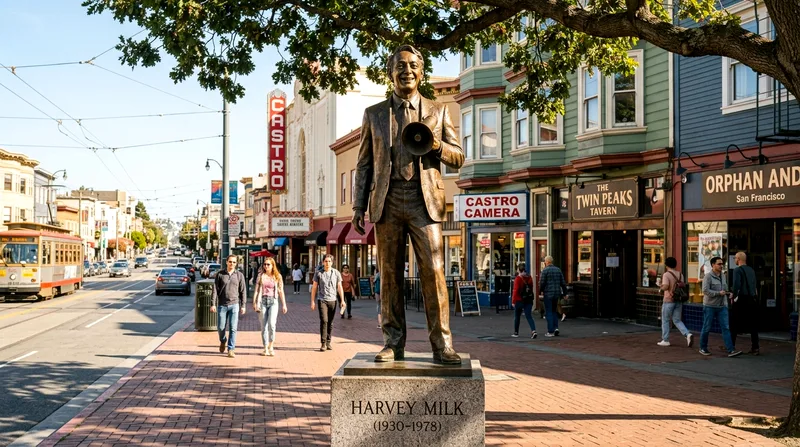
The Castro District walking tour exists because this four-block stretch of San Francisco holds more concentrated LGBTQ+ history than almost any neighborhood in the world, and most of it isn't obvious from the sidewalk. Centered on Castro Street between Market and 19th, the area became the epicenter of gay political organizing in the 1970s, anchored by Harvey Milk's camera shop at 575 Castro Street and the activism that followed his election to city supervisor in 1977 — the first openly gay man elected to public office in California.
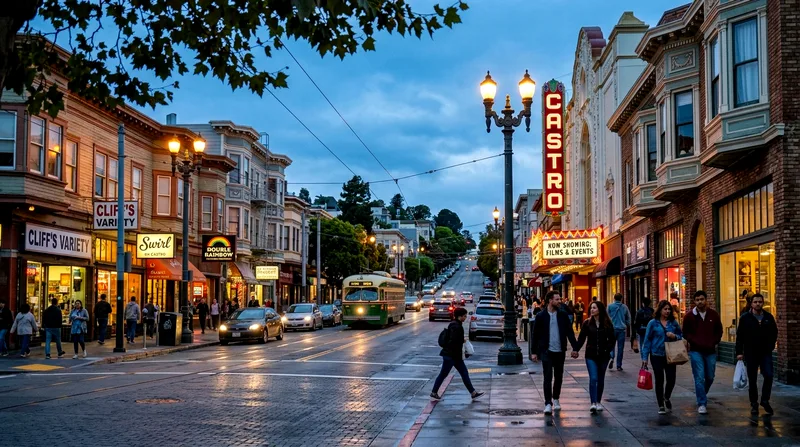
Walk through without context and you'll see rainbow crosswalks, a few bars, and a restored movie palace. Walk through with someone who knows the history and you'll see the site of the White Night riots, the storefront where Milk ran his failed and eventually successful campaigns, and the plaza named for him that doubles as a Muni station entrance. The neighborhood is small — compact enough to cover on foot in under an hour if you're rushing — but the density of meaning packed into it rewards slowing down.
Historical significance and cultural landmarks
Key stops include Harvey Milk Plaza at the top of the Castro Muni station, the GLBT Historical Society Museum on 18th Street (small, ticketed separately, usually $10 or less), the Castro Theatre (a 1922 movie palace currently under renovation with a mixed-use future still being debated locally), and the Pink Triangle Park, a memorial garden referencing the Nazi-era symbol used to mark gay prisoners. None of these sites come with extensive on-site interpretation — there's a plaque here and there, but nothing like the dense signage you'd find at a national historic site. That gap is exactly what a guide fills.
Why guided tours enhance the experience
A good guide connects the dots between buildings that otherwise look like any other commercial strip. They'll point out where early gay bars operated under coded names to avoid police raids, explain how the AIDS crisis emptied and then rebuilt the neighborhood's social fabric, and contextualize why the rainbow flag — first flown here in 1978 — became a global symbol. I'd put real weight on this: without narration, you're seeing architecture. With it, you're seeing forty years of civil rights history compressed into six city blocks.
Tour Formats: Independent vs Guided Options
You have two real choices here, and the right one depends on how much reading you're willing to do beforehand. Independent exploration costs nothing beyond transit and gives you total control over pace — ideal if you're already deep into Randy Shilts' "The Mayor of Castro Street" or have watched the Gus Van Sant film "Milk" recently enough to recognize the locations. Guided tours cost money but compress hours of research into a 90-minute to two-hour walk, with a human who can answer questions on the spot.
I'd lean toward guided for first-time visitors and solo travelers in particular — not because self-guided is bad, but because the Castro's history is undersold by its physical appearance. You won't accidentally stumble onto the right facts the way you might figure out, say, Fisherman's Wharf's layout on your own.
Guided group tours offer the best balance of cost and historical depth, while private tours suit those wanting flexibility and independent walks suit well-read budget travelers.
Castro District walking tour options compared: format, cost, and best for
| Option | Typical Duration | Approx. Cost (USD) | Group Size | Best For |
|---|---|---|---|---|
| Self-guided walk | 45-60 min | Free | N/A | Budget travelers, repeat visitors |
| Public guided group tour | 1.5-2 hours | $30-50 per person | 10-20 people | First-time visitors, solo travelers |
| Small-group guided tour | 2 hours | $40-60 per person | 6-10 people | Couples, photographers |
| Private guided tour | 2-3 hours | $150-300+ total | 1-8 people | Families, honeymooners, custom requests |
| Self-guided + museum visit | 1.5-2 hours | $10-15 (museum entry) | N/A | History enthusiasts on a budget |
Prices approximate as of 2024-2025; confirm current rates and inclusions when booking.
Self-guided walking route overview
A basic self-guided loop starts at Harvey Milk Plaza, heads south down Castro Street past the Theatre and Milk's former camera shop, detours to 18th and Castro (historically called "the gayest four corners in the world"), swings past the GLBT Historical Society Museum, and loops back via Pink Triangle Park. Total distance is under a mile and a half, walkable in 45 minutes without stops. Bring a phone with a mapped list of addresses — there's no official city-published route marker system, so you're relying on your own research or a downloaded guide PDF.
Guided tour benefits and storytelling depth
The storytelling gap is the main argument for paying. Operators like Cruisin' The Castro — one of the longest-running names in this space — built their reputation on guides who often have personal or community ties to the neighborhood's activist history, not just memorized scripts. That matters here more than in most walking tour categories, because a chunk of this history is recent enough (within living memory) that firsthand framing changes the tone from "museum tour" to something closer to oral history.
Top-Rated Tours: Guide Credentials & Group Size
Not all Castro tours are built the same, and the differentiator usually isn't the route — most hit the same six or seven landmarks — it's guide depth and group size. Ask before booking whether the guide has a background in local LGBTQ+ history, journalism, or community activism, versus a general city-tour company that added the Castro as one stop among many citywide offerings. The former tends to deliver sharper, more specific storytelling; the latter can feel like a recycled script applied to a neighborhood the guide doesn't live in.
Group size shapes the experience more than people expect. A group of 15-20 moves slowly, and you'll strain to hear on busier blocks near Market Street. Groups capped at 10-12 allow actual conversation and questions — closer to what you'd want for a topic this personal.
Tour operator comparison and expertise
When comparing options, look past star ratings (which are often uniformly high across operators) and read a handful of recent written reviews for specifics about the guide's knowledge, not just friendliness. A tour billed as an "LGBTQ history walk" should mention Harvey Milk's political career in detail, the White Night riots, the AIDS Memorial Quilt's origins, and the neighborhood's shift from working-class Irish enclave to gay political center in the 1960s-70s. If a tour description is vague on specific events and heavy on generic phrases like "distinct culture," that's a signal the content may be thin.
Group size options and tour duration
Standard public group tours typically run 90 minutes to 2 hours and cover roughly 1 to 1.5 miles — a comfortable pace with stops for explanation, not continuous walking. Private and small-group options exist for couples or families wanting a more personal pace, usually capped around 6-8 people, and can often be customized to spend more time at specific sites, like the GLBT Historical Society Museum or Harvey Milk Plaza. Expect private tours to run longer in both duration and cost compared to scheduled group departures.
How to Book & Tour Pricing
Booking a Castro District walking tour is straightforward, but timing matters more than people assume. Afternoon and weekend slots fill first, especially during Pride month in June and the Castro Street Fair in October, when the neighborhood is at its busiest and tours sell out days in advance. Outside those peak windows, same-week booking is usually fine.
Booking platforms and availability
Most visitors book through major tour aggregator platforms (Viator, GetYourGuide) or directly through an operator's own site, like Cruisin' The Castro's booking page. Aggregators are convenient for comparing multiple operators and reading verified reviews side by side, but direct booking sometimes gets you a more direct line to the guide for questions about accessibility or custom requests. Always check cancellation policy before paying — many Castro tours allow free cancellation up to 24 hours ahead, which is worth confirming given San Francisco's famously unpredictable weather.
Pricing transparency and what's included
Expect public group walking tours in this category to run roughly $30-50 per person for a 2-hour experience — in line with similar history-focused walking tours in Los Angeles' West Hollywood or Seattle's Pike Place Market food walks. Private tours run higher, often $150-300+ total depending on group size and length, since you're paying for a dedicated guide rather than a per-head slot. Museum entry (like the GLBT Historical Society) is usually not included and costs extra, so check the listing carefully — "walking tour" rarely means "all-inclusive." Watch out for listings that bundle in a meal or drink credit; verify what's actually covered rather than assuming.
Best Time to Visit & Nearby Attractions
Weekday mornings and early afternoons, roughly 10am-2pm, give you the clearest sidewalks and the best light for photos along Castro Street's colorful storefronts. Weekends bring brunch crowds and more street life, which some travelers actually prefer for atmosphere, even if it means a slower-paced walk.
Seasonal considerations and crowds
June is Pride month and the neighborhood is at full volume — exciting if that's what you're after, but tours book out and street noise competes with the guide's voice. Fog is a factor most months; San Francisco's microclimates mean the Castro, sitting slightly inland from the coast, is usually milder than the Marina or Ocean Beach, but layer up anyway. Spring and fall (April-May, September-October) tend to offer the best balance of good weather and manageable crowds.
Adjacent neighborhoods and add-on experiences
The Castro sits within easy walking distance of Noe Valley to the south — quieter, more residential, good for a coffee stop after your tour — and the Mission District to the east, which has its own mural-focused walking tours and a completely different (Latino and younger artist) cultural identity worth contrasting against the Castro's. Twin Peaks is a short drive or rideshare away and worth combining with a Castro visit for panoramic Bay Area views, especially at golden hour. If you're building a multi-stop day, pairing a Castro walking tour with a Mission District food or mural tour makes for a logical half-day-plus-half-day itinerary rather than cramming both into one rushed outing.
Frequently asked questions
How long does a Castro District walking tour take?
Most public guided tours run 1.5 to 2 hours covering roughly 1 to 1.5 miles at an easy pace with stops for explanation. Private tours can run longer, up to 3 hours, if customized. A self-guided version of the same route takes about 45-60 minutes if you skip stopping to read or listen to anything extra.
What LGBTQ+ history is covered on Castro tours?
Expect coverage of Harvey Milk's political career and assassination, the 1979 White Night riots, the neighborhood's transformation from a working-class area into a gay political center in the 1960s-70s, the origins of the rainbow flag in 1978, and the AIDS crisis's impact on the community through the 1980s and 90s.
Can I book a private or small group Castro tour?
Yes. Several operators, including Cruisin' The Castro, offer private tours typically capped at 6-8 people, running $150-300+ total depending on length and customization. These let you set the pace, linger at specific sites like Harvey Milk Plaza, and ask more detailed questions than a larger scheduled group allows.
What landmarks will I see on a Castro walking tour?
Standard stops include Harvey Milk Plaza, the Castro Theatre, 575 Castro Street (Milk's former camera shop), the GLBT Historical Society Museum on 18th Street, Pink Triangle Park, and the intersection of 18th and Castro. Some guided tours extend toward Market Street or brief detours near Noe Valley.
Is there a free walking tour of the Castro District?
There's no official free guided tour, but you can self-guide for free using a mapped list of the main landmarks — Harvey Milk Plaza, the Castro Theatre, and Pink Triangle Park are all outdoor, publicly accessible sites. You'll miss the narrated context a paid guide provides, so pair the walk with background reading beforehand if going this route.