Compare Chinatown food tours in San Francisco by stops, portions, and storytelling depth. Find guided walks and dim sum tastings before you book.
Who Should Book a Chinatown Food Tour
A Chinatown food tour in San Francisco works best as a first-afternoon orientation, not a last-day splurge. You'll leave knowing which bakery sells the best egg tarts, which alley has the real dim sum (not the tourist-menu version on Grant Avenue), and how to order at a counter where nobody speaks much English. That knowledge is worth more on day one than day four.
The neighborhood itself is the oldest Chinatown in North America, established in the 1850s, and it's dense — about 24 blocks squeezed into a few streets north of Union Square. Without context, most visitors walk Grant Avenue, buy a souvenir, and miss the actual food culture happening one block over on Stockton Street, where locals shop for groceries and the restaurants don't bother with English menus. A guide bridges that gap in a way that no app or guidebook fully replicates.
I'd skip this tour if you're only in San Francisco for 24 hours and have to choose between this and, say, a bay cruise to Alcatraz or a drive down to Muir Woods — those are harder to replicate on your own. Chinatown, by contrast, you can explore solo with a bit of research. The tour's real value is time efficiency and cultural translation, not geographic access.
Best for first-time visitors
If this is your first trip to San Francisco, a guided walk solves the biggest problem: you don't know what you don't know. Chinatown has over a dozen bakeries, several dim sum houses, a fortune cookie factory tucked into an alley, and herbal shops that look closed but aren't. A two-to-three-hour guided tour typically hits six to ten of these, which would otherwise take you a full day of trial and error to find — and you'd likely end up eating at the first decent-looking restaurant on Grant Avenue instead, which is rarely the best option.
Ideal for food enthusiasts and culture seekers
Food enthusiasts get more out of this than casual sightseers because the tastings are the point, not a side note. Expect Cantonese-style barbecue pork, hand-pulled noodles, custard tarts, and often a tea tasting where the guide explains oolong versus pu-erh. Culture seekers benefit from the storytelling layer — immigration history, the 1906 earthquake's effect on the neighborhood's rebuilding, and the role of family associations that still run parts of the community. Compare this to a Napa Valley wine tour: there, the narrative is about terroir and winemaking process; here, it's about immigration and adaptation, which makes for a denser, more human story per stop.
Tour Types: Guided vs Self-Guided Walks
Guided and self-guided food walks in Chinatown San Francisco serve different travelers, and conflating them leads to disappointment. A guided tour, booked through platforms like GetYourGuide or operators such as Devour Tours, gets you into places you wouldn't find alone — a basement dim sum spot with no English sign, or a fortune cookie factory that doesn't advertise tours at all. Self-guided options, sometimes sold as audio walks or downloadable maps, cost less and let you move at your own pace, but you're responsible for finding the food yourself and paying for it separately.
The trade-off is control versus access. On a guided tour, tastings are pre-arranged and usually included in the price, so you're not fumbling with cash or menus at eight different counters. On a self-guided walk, you choose what and how much to eat, which matters if you have dietary restrictions or just don't want dim sum at 10am. I've found self-guided apps work fine if you've already done some reading on the neighborhood's history — if not, you'll walk past the Fortune Cookie Factory without realizing what you're looking at.
Guided small-group tours offer the most tastings and cultural context, while self-guided walks cost less but require more initiative from the traveler.
Chinatown food tour San Francisco formats compared: stops, duration, and storytelling depth
| Tour Format | Typical Duration | Stops/Tastings | Group Size | Storytelling Depth |
|---|---|---|---|---|
| Small-group guided walk | 2.5-3 hours | 6-10 | 8-15 people | High |
| Private guided tour | 2-3 hours | 6-10 | 1-6 people | Highest |
| Self-guided audio walk | 1.5-2.5 hours (self-paced) | Varies, pay separately | Solo or own group | Low to moderate |
| EatWith-style host meetup | 2-3 hours | 4-7 | Small group | Moderate |
| Combined Chinatown/North Beach walk | 3-3.5 hours | 7-9 | 8-15 people | High |
Figures reflect typical industry ranges as of 2024-2025; always confirm current stop counts, duration, and pricing on the booking platform before purchase.
Small group guided experiences
Small group tours, typically capped at 10 to 15 people, are the standard booking on GetYourGuide and similar platforms. Expect a licensed local guide, pre-arranged tastings at five to eight stops, and a fixed 2.5 to 3-hour route covering Grant Avenue, Stockton Street, and sometimes a short detour into North Beach for an Italian espresso or pastry — a nice contrast stop that highlights how abruptly Chinatown gives way to Little Italy along Columbus Avenue. Reviews on TripAdvisor for this format tend to praise the storytelling and portion variety; complaints usually center on group size feeling too large at certain bakery counters, where space is tight.
Self-guided walking options
Self-guided Chinatown food walks come as GPS-triggered audio tours or printed/digital maps with recommended stops. You pay once for the guide content, then pay separately for whatever food you buy — this usually ends up cheaper overall if you're moderate eaters, but can run higher if you graze at every recommended stop. Platforms like EatWith occasionally list host-led small gatherings that blend self-guided elements with a local meeting you partway through. The downside: no one explains why a shop matters, and you can't ask questions about ingredients on the spot, which matters more here than on, say, a self-guided tour in Seattle's Pike Place Market, where signage does more of that work for you.
What to Expect: Stops, Tastings & Cuisines
Most San Francisco Chinatown food tours structure the route around six to ten tastings over roughly a mile and a half of walking. Portions are sample-sized — a dumpling here, a half pastry there — not full meals, so eat a light breakfast but don't skip it entirely. Cuisines featured skew Cantonese, reflecting the neighborhood's founding immigrant population, though some tours fold in Hong Kong-style bakery items and occasionally a Sichuan or Hunan stop if the route extends toward the edges of the district.
What distinguishes a strong tour from a mediocre one is portion consistency and stop variety. A tour that gives you eight stops but six of them are variations on the same bun doesn't deliver the breadth promised. Look for an itinerary that explicitly lists a savory course, a bakery stop, a noodle or rice dish, and a sweet or tea-based finish — that balance tells you the operator actually planned the route around flavor variety, not just convenient locations.
Dim sum and bakery stops
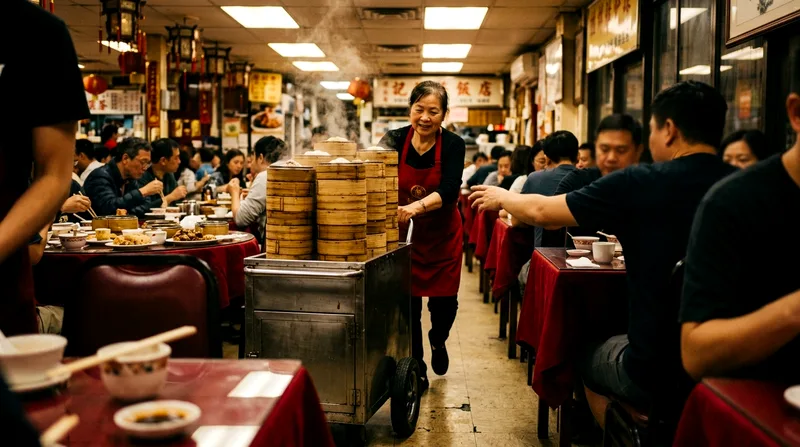
Dim sum tastings on a San Francisco Chinatown tour usually mean har gow (shrimp dumplings), siu mai (pork dumplings), or char siu bao (barbecue pork buns), served in small portions rather than the full steamer baskets you'd get sitting down at a restaurant. Bakery stops typically include egg tarts, pineapple buns (which contain no pineapple — the name refers to the crust's appearance), and sometimes a red bean pastry. If you've done a dim sum brunch elsewhere in the city, this is more of a tasting primer than a replacement for a sit-down dim sum meal — plan a separate dim sum lunch if you want to eat until full.
Fortune cookie factory visits
Nearly every guided tour includes a stop at the Fortune Cookie Factory, a small working operation tucked into an alley off Grant Avenue where you can watch cookies folded by hand on a hot press. It's a genuine working business, not a staged tourist attraction, though it gets crowded with tour groups by mid-morning. Expect a small purchase opportunity — bags of fresh or novelty cookies (some with less family-friendly fortunes, sold separately) — and note that photography is usually fine but ask before filming the staff directly.
Booking Guide: Duration, Group Size & Inclusions
Typical Chinatown food tours run 2 to 3.5 hours, covering 1 to 2 miles of mostly flat walking. Group sizes range from private bookings of 2 people up to standard small-group tours of 12-15. Larger groups mean lower per-person cost but more waiting at tasting counters and less one-on-one time with the guide — if storytelling depth matters to you, a smaller group or private option delivers more. Inclusions almost always cover the food tastings themselves; drinks beyond a tea sample, alcohol, and gratuity are usually extra. Compare this structure to a Monterey food-and-wine walking tour: similar format, but Chinatown's density means more stops packed into less walking distance.
Cancellation policies and pricing
Prices for Chinatown food tours in San Francisco generally fall in a moderate range for a 2-3 hour guided experience with multiple tastings included — expect this to sit above a basic walking tour but below a full-day excursion like a Napa Valley wine tour. Always check the live price and cancellation policy on the booking platform before paying; most reputable listings on GetYourGuide offer free cancellation up to 24 hours ahead, but budget or third-party resellers sometimes don't. Read the most recent reviews on TripAdvisor or the booking platform itself, not just the overall star rating — a 4.5-star average can hide recent complaints about reduced stop counts or guide changes.
Dietary accommodations and accessibility
Vegetarian accommodations are increasingly common but not universal — email the operator ahead of booking rather than assuming, since some stops are fixed restaurant partnerships with limited substitution options. Severe shellfish or nut allergies are harder to manage on a tasting-format tour where you're sampling pre-made items at multiple counters; if that's your situation, a self-guided walk where you control each purchase is safer. Physically, routes are flat but involve real walking and some standing at counters — fine for most senior travelers, though those needing frequent seated breaks should ask about pacing before booking.
When to Book Your Tour
Book a San Francisco Chinatown food tour at least a few days ahead during peak season (June through September, plus major holidays like Lunar New Year, which usually falls between late January and mid-February and transforms the neighborhood with parades and crowds). Morning tours, often starting between 10am and 11am, tend to book up faster because bakeries and dim sum counters are freshest and least crowded earlier in the day — by early afternoon, some items sell out.
Lunar New Year is a double-edged case: the neighborhood is at its most visually striking, with lanterns and decorations beyond the usual, but it's also the most crowded week of the year in Chinatown, and some regular tour stops may close for family celebrations or shift hours. If you want the cultural spectacle, book this window deliberately; if you want a calmer, more conversational tour with your guide, avoid it and go in shoulder months like April or October instead. Weekday tours, especially Tuesday through Thursday, generally run smaller and calmer than weekend departures, which fill with both tourists and SF locals doing weekend dim sum runs.
Frequently asked questions
How many stops are included in a Chinatown food tour?
Most guided Chinatown food tours in San Francisco include 6 to 10 tasting stops over a 2 to 3.5 hour route. Self-guided walks vary more since you choose your own stops, and private tours sometimes offer flexibility to add or skip locations based on your group's preferences. Always check the specific itinerary before booking rather than assuming a standard count.
What cuisines are featured on Chinatown food tours?
Cantonese cuisine dominates, reflecting the neighborhood's founding immigrant community — expect dim sum, barbecue pork, and Hong Kong-style bakery items like egg tarts and pineapple buns. Some tours extend into Sichuan or Hunan stops near the district's edges, and many pair a North Beach stop for Italian espresso or pastry to show the contrast between the two adjacent neighborhoods.
What is included in a Chinatown food tour price?
Standard inclusions are the guide, all scheduled food tastings, and sometimes a tea sample. Alcohol, extra drinks, gratuity, and souvenir purchases (like fortune cookie bags) are typically not included. Confirm inclusions on the specific listing — some budget tours cut stop counts rather than disclosing it upfront.
Can I book a self-guided Chinatown food tour?
Yes — self-guided options exist as downloadable maps or GPS-triggered audio tours, letting you explore Grant Avenue and Stockton Street at your own pace while paying for food separately at each stop. This suits travelers with dietary restrictions or those who prefer flexibility, but you lose the direct cultural storytelling and insider access a live guide provides.
What is the best time to book a Chinatown food tour?
Book a few days ahead for summer (June-September) and around Lunar New Year (late January to mid-February), both peak demand periods. Morning departures around 10-11am sell out faster since bakeries and dim sum are freshest then. Weekday tours, particularly Tuesday through Thursday, tend to run smaller and calmer than weekend slots.