Compare Mission District food tours in San Francisco blending taco tastings with mural art. Tour types, pricing ranges, and booking tips before you reserve.
Who Mission District Food Tours Suit Best
A Mission District food tour in San Francisco works best for people who want context with their calories — not just a string of tacos, but the story of why this particular stretch of the Mission, roughly bounded by 16th, 24th, Mission, and Valencia Streets, became the city's most concentrated strip of Latin American food and large-scale murals. These tours typically run two to three hours, cover six to twelve blocks on foot, and include anywhere from four to seven tastings.
They suit solo travelers and couples particularly well, since most operators run small-group departures that mix strangers into one walking party — a good way to meet people without committing to a group trip. Families with older kids (ten and up) can manage the pace and food variety, though toddlers and strollers make the narrow sidewalks and alley stops (Clarion Alley especially) harder going. Senior travelers should check the stated walking distance before booking; some tours cover 1.5 miles, which is manageable for most but not ideal if standing for long stretches during mural explanations is uncomfortable.
I'd steer honeymooners and photographers toward late-afternoon departures, when the light on Balmy Alley's murals is better and the crowds thin before dinner service. Wine lovers should note that most food-focused walks are not built around alcohol — a few include a michelada or horchata stop, but this isn't Napa Valley with scheduled pours. If pairing food with wine matters to you, look at a separate wine-focused SF tour instead and treat the Mission walk purely as a culinary and art experience.
Food Lovers Seeking Authentic Mission Cuisine
The Mission's food identity runs deeper than the taco trucks tourists expect. A well-built tour will stop at a mix of old-guard taquerias (several have operated since the 1960s-70s wave of Latin American immigration into the neighborhood) alongside newer additions — a Salvadoran pupusa counter, a Oaxacan mole spot, maybe a modern bakery doing conchas or a Mexican ice cream shop for dessert. If a tour's itinerary looks identical to five others you've seen advertised, that's a sign it's recycling the same three stops everyone else uses. Ask, before booking, whether the tastings rotate seasonally or by vendor availability — operators like Sidewalk Food Tours and Secret Food Tours structure their Mission itineraries this way, swapping vendors based on what's fresh or newly opened.
Art Enthusiasts Wanting Cultural Context
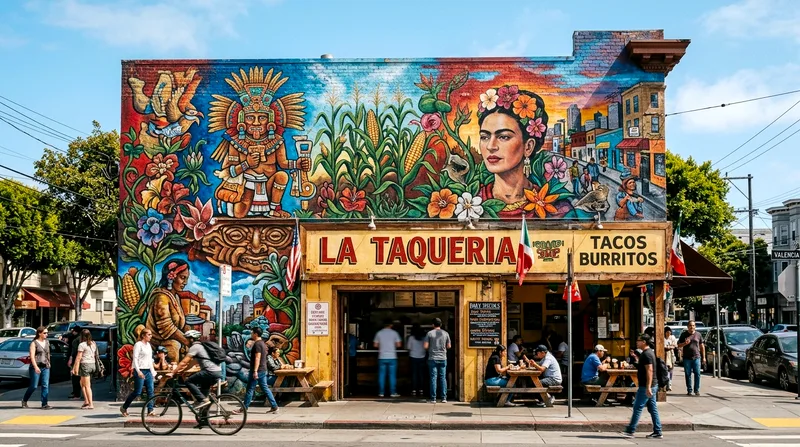
The Mission has more outdoor murals than almost any neighborhood in the US — Balmy Alley alone holds over 30, many dating to a 1970s Chicano art movement protesting Central American conflict. A tour guide who can explain the difference between a mural commemorating the Salvadoran civil war and a newer piece addressing gentrification adds real value you can't get from just walking Valencia Street with a map. If you're a photographer or simply curious about the city's political history beyond the murals at Coit Tower or the Castro, prioritize tours that market themselves explicitly as "food and art" rather than food tours that mention murals as an afterthought in the description.
Tour Types: Guided, Group & Private Options
Three structures dominate the Mission District food tour market, and each trades off differently on cost, flexibility, and depth.
Scheduled small-group walks are the most common and usually the best value — groups run eight to sixteen people, led by one guide, departing at fixed times a few days a week. Private tours cost more per person but let you set the pace, adjust for dietary restrictions more thoroughly, and skip the small talk with strangers if that's not your thing. Self-guided options — a mobile app or printed map with suggested taco stops — exist too, usually through platforms like ClassBento or as a downloadable guide, and they're the cheapest route but remove the mural storytelling that makes these tours worth booking in the first place.
Guided Group Walks with Local Experts
This is the format most San Francisco visitors land on, and for good reason. A local guide — often someone who's lived in or near the Mission for years — walks a fixed route, stopping at pre-arranged vendors who know the tour is coming (which matters, since walk-in large groups can overwhelm a small taqueria counter otherwise). Group sizes in the 10-15 range keep pricing moderate, typically landing somewhere in the $60-$120 per person range depending on the number of tastings and whether a guide fee is bundled separately. Gray Line and similar larger operators sometimes run bigger buses-plus-walking hybrids elsewhere in the city, but for the Mission specifically, smaller specialized operators tend to do a better job — the neighborhood's narrow sidewalks don't suit large coach groups well.
Private Tours and Self-Guided Alternatives
Private tours make sense for families, groups with mixed dietary needs (vegetarian, gluten-free, kosher-adjacent), or anyone who wants a guide's full attention for a marriage proposal, birthday, or small corporate outing. Expect a meaningful markup — often double the per-person group rate — but you gain control over pacing and can request mural-heavy or food-heavy route adjustments in advance. Self-guided apps and printed guides, by contrast, run far cheaper (sometimes under $20) but you lose the guide's negotiated tastings, the line-skipping at popular counters, and crucially, someone to actually explain the mural history rather than just pointing a phone camera at it. For most first-time visitors, the self-guided route feels like a missed opportunity in a neighborhood this layered.
What to Compare When Booking a Tour
Not all Mission District food tours are structured the same way, and the listing descriptions on sites like GetYourGuide or TripAdvisor don't always make the differences obvious at a glance. Read past the headline price.
Tastings, Walking Distance, and Inclusions
Check exactly how many tastings are included and whether that means a full plate or a two-bite sample — the difference matters if you're planning the tour as a meal replacement versus a snack-sized cultural outing. Most legitimate Mission tours list 5-7 stops and run 1-1.5 miles of walking over two to three hours; anything claiming ten-plus stops in two hours is likely overselling portion size or rushing the mural commentary. Confirm whether non-alcoholic drinks (horchata, agua fresca) are included or an extra cost, and whether the listed price covers tax and gratuity or expects a tip on top.
Group Size, Cancellation Policy, and Accessibility
Group size affects both intimacy and your ability to actually hear the guide over Mission Street traffic — anything over 16 people starts to feel like a logistics exercise rather than a walk. Check the cancellation window; many operators allow free cancellation up to 24-48 hours ahead, which matters in a city where fog and sudden rain can change plans fast. Ask directly about wheelchair or limited-mobility accommodation — sidewalks in parts of the Mission are uneven, and not every operator has a modified route. If you have severe allergies, email ahead rather than trusting a generic "dietary restrictions welcome" line in the listing; small taco counters can't always guarantee cross-contamination control.
Best Times to Book Your Food Tour
Timing affects both the experience quality and your odds of getting the date and time slot you actually want.
Seasonal Demand and Weather Considerations
Unlike beach-driven itineraries in San Diego or Monterey, San Francisco's Mission District doesn't really have an off-season for food tours — the neighborhood sits in a microclimate that's notably warmer and sunnier than the fog-bound areas near the coast or Golden Gate Park. That said, summer weekends (June through August) draw the heaviest tourist volume and the largest group sizes, while weekday mornings in fall (September-October, often San Francisco's best weather stretch) offer smaller groups and more guide attention. Winter tours still run fine — bring a layer, since Mission evenings cool down fast even when days are mild.
Advance Booking Windows and Availability
Popular small-group departures, especially weekend afternoon and early-evening slots, can sell out 1-2 weeks ahead during peak summer months. If you're traveling during a major SF event — Pride weekend in June or Hardly Strictly Bluegrass in early October — book three to four weeks out. Off-peak weekday slots are often bookable within 48-72 hours of the tour date. Always compare current prices and reviews across two or three listings before booking; availability and guide quality shift based on who's running the route that week, and a tour with a thin review count under 50 is harder to judge than one with several hundred.
Food & Art Tour Comparison Table
Here's how the main Mission District tour formats stack up against each other on the factors that actually affect your decision.
Small-group guided walks offer the best balance of cost and mural storytelling, while private tours suit dietary needs and self-guided apps suit tight budgets.
Mission District food tour San Francisco: formats compared by cost, pace, and group size
| Tour Format | Typical Duration | Group Size | Price Range (per person) | Mural/Art Focus |
|---|---|---|---|---|
| Small-group guided walk | 2-3 hours | 8-16 people | $60-$120 | Moderate to strong |
| Private guided tour | 2-3 hours | 1-6 people (custom) | $150-$300+ | Customizable, often strong |
| Self-guided app/map | Flexible, 1.5-2.5 hours | Solo or any size | Under $20 | Minimal, self-directed |
| Large coach/hybrid tour | 3-4 hours (multi-neighborhood) | 20+ people | $70-$130 | Light, brief stops |
Prices and group sizes are typical ranges based on common market structures; always check current prices and reviews before booking.
Frequently asked questions
How much does a Mission District food tour cost?
Small-group guided tours typically run $60-$120 per person for two to three hours and five to seven tastings. Private tours run notably higher, often $150-$300 or more depending on group size and customization. Self-guided app-based options can cost under $20 but skip the guide and negotiated vendor access. Always check current prices before booking, since they shift by season and operator.
How many tastings and restaurants are included?
Most reputable Mission food tours include five to seven tastings across that many vendors, mixing classic taquerias with newer spots doing pupusas, mole, or Mexican-style ice cream. Portions are usually sample-sized rather than full plates, so eat a light breakfast but don't skip it entirely. Tours advertising ten-plus stops in under two hours are usually overselling portion size.
Are murals and street art featured on food tours?
Yes, on tours explicitly marketed as food-and-art experiences — these typically route through Balmy Alley and Clarion Alley, two of the densest mural concentrations in the city, with guide commentary on the Chicano art movement and more recent gentrification-themed pieces. Tours marketed purely as "food tours" may walk past murals without stopping to explain them, so check the itinerary description carefully if art history matters to you.
What is the walking distance and difficulty level?
Expect roughly 1 to 1.5 miles of walking on flat but sometimes uneven sidewalks, spread over two to three hours with frequent stops. This suits most fitness levels, including many senior travelers, but isn't ideal for anyone needing to sit frequently or using mobility aids on narrow alley routes. Ask the operator directly about accessible route modifications before booking.
Can I book a private or small-group food tour?
Both are widely available. Small-group tours (8-16 people) offer the best value and run on fixed schedules; private tours cost roughly double per person but allow custom timing, dietary accommodation, and route changes. Families, couples celebrating an occasion, or groups with specific allergy concerns tend to get more out of the private format despite the higher cost.