Plan your San Francisco family trip with this kid-tested 4-day itinerary. Stroller-friendly routes, nap breaks, and bookable family tours included.
Who This Itinerary Is For
This San Francisco family itinerary is built for parents traveling with kids roughly age 2 to 12, including families pushing strollers and those managing toddler nap schedules. It assumes you have four full days, a rental car or ride-share budget for day 4, and a tolerance for starting mornings by 9am rather than 7am — San Francisco doesn't really wake up early, and neither should your itinerary.
If you're traveling with teenagers only, you can move faster and skip some of the nap-break padding built into this plan. If you're a couple without kids, honestly, look at a different itinerary — this one deliberately avoids late dinners, skips some nightlife-adjacent neighborhoods, and prioritizes playgrounds and stroller ramps over bars and rooftop lounges.
Compare this to a typical Los Angeles family trip, where everything is spread across 20+ miles and you're buckling kids into car seats five times a day. San Francisco is compact — about 7 miles by 7 miles — so you can do most of this on foot, cable car, or a short Uber ride. That's the real advantage over LA or even San Diego, where the zoo and SeaWorld alone eat a full day of driving.
One honest caution: San Francisco weather in summer is often foggy and 58–62°F (14–17°C), not the sunny beach-vacation weather families expect from California. Pack layers, not swimsuits.
Day 1: Golden Gate & Presidio
Day one is a deliberately low-key arrival day built around one big photogenic activity and a lot of green space for kids to run around in after travel days.
Day 2 (Alcatraz) requires the earliest advance booking, while Day 1 and Day 3 are the most stroller-friendly overall.
San Francisco family itinerary by day: activities, duration, and stroller-friendliness
| Day | Morning | Afternoon/Evening | Est. Duration | Stroller-Friendly |
|---|---|---|---|---|
| Day 1 | Golden Gate Bridge walk | Presidio Tunnel Tops | 5–6 hrs | High |
| Day 2 | Pier 39 sea lions, Wharf | Alcatraz ferry tour | 6–7 hrs | Moderate |
| Day 3 | Chinatown | Japantown or Haight-Ashbury | 5–6 hrs | Moderate |
| Day 4 | Muir Woods Main Trail | Sausalito waterfront | 6–8 hrs | Moderate (first mile only) |
Figures as of 2024–2025; durations include travel time between stops and assume one rest break per day.
Morning: Golden Gate Bridge Walk
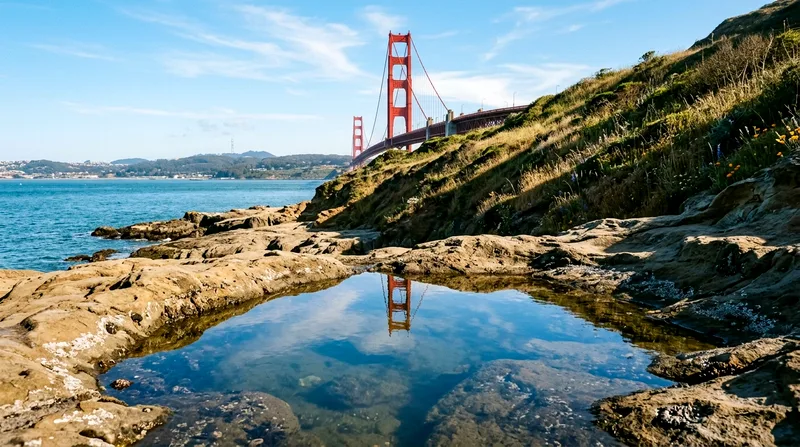
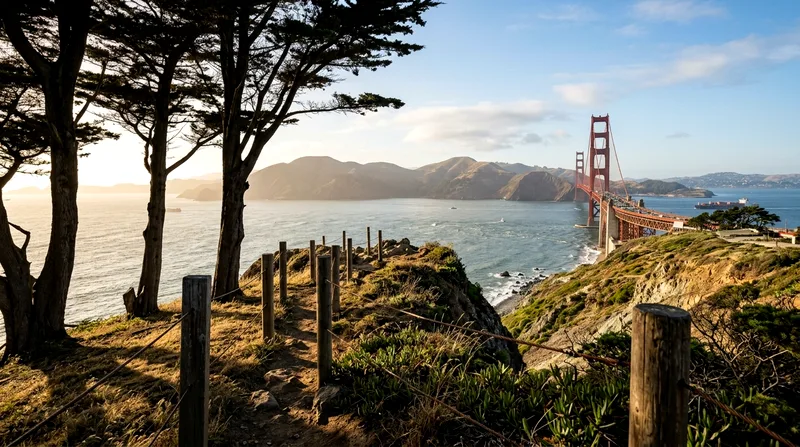
Start at the Golden Gate Bridge Welcome Center around 9:30am, before tour buses arrive in force. The east sidewalk is stroller-friendly and paved, running about 1.7 miles one-way to the Marin side — but with young kids, plan to walk 15–20 minutes out to the first viewpoint and back rather than attempting the full crossing. Wind on the bridge is real; a jacket for toddlers isn't optional even in July. Restrooms and a café are at the Welcome Center, which matters more than it sounds once you have a cranky 3-year-old.
Afternoon & Evening: Presidio Exploration
After lunch, head into the Presidio rather than back downtown. The Presidio Tunnel Tops park, opened in 2022, has stroller-wide paths, a nature play area, and picnic lawns with bay views — it's the single best nap-break location on this entire itinerary, since you can push a stroller along flat paths while a toddler sleeps. Budget 2 hours here. Dinner options inside the Presidio are limited, so head toward the Marina district (Chestnut Street) for casual, kid-tolerant restaurants rather than fighting traffic back to Fisherman's Wharf.
Day 2: Fisherman's Wharf & Alcatraz
This is the one day on the itinerary that requires advance booking, and it's non-negotiable if Alcatraz is on your list.
Morning: Wharf Attractions and Sea Lions
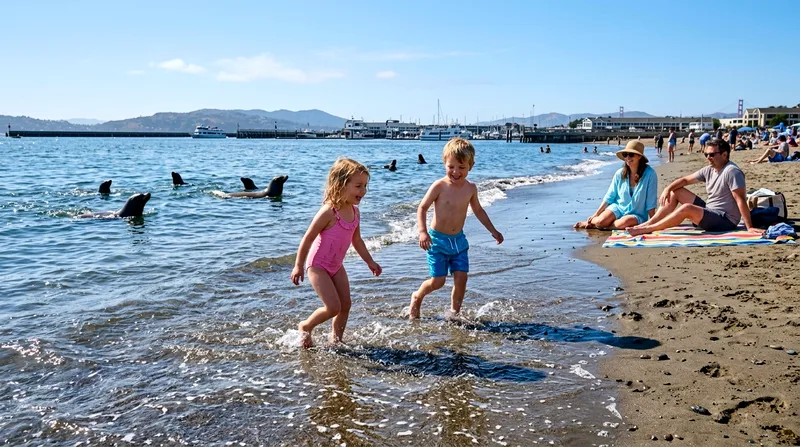
Arrive at Pier 39 by 9am to see the sea lions before the crowds thicken — they're free to view from an open-air deck, no ticket required, and genuinely hold toddler attention for 20+ minutes. Fisherman's Wharf itself is touristy and the seafood is overpriced for what you get; I wouldn't plan a sit-down meal here. Instead grab clam chowder in a bread bowl to go and eat on the pier benches. The Aquarium of the Bay (around $30–40 per adult, less for kids) is a solid rainy-day backup if fog rolls in thick.
Afternoon & Evening: Alcatraz Ferry Tour
Book your Alcatraz ferry and cellhouse audio tour at least 2–3 weeks ahead — tickets routinely sell out, especially in summer, and this is the one reservation on this whole trip you cannot wing. The ferry ride is about 15 minutes; the full visit runs 2–2.5 hours including the audio tour. The audio tour works for kids roughly 7 and up; younger children often find the cellblock dark and genuinely a little scary, so if you're traveling with toddlers, consider the shorter day tour option rather than a night tour, and bring a carrier instead of a stroller — the island has uneven terrain and stairs. Compare current ferry times and prices before booking, since schedules shift seasonally.
Day 3: Neighborhoods & Local Culture
Day three trades big attractions for walkable neighborhoods, which is where San Francisco actually earns comparisons to Seattle or Portland — cities built around distinct, walkable districts rather than single worth seeing landmarks.
Morning: Chinatown Exploration
Enter Chinatown through the Dragon Gate on Grant Avenue around 10am. Sidewalks here are narrow and often crowded with produce displays, so a compact umbrella stroller works far better than a full-size one — if you're renting gear, this is the day to swap. Kids tend to enjoy the Golden Gate Fortune Cookie Factory on Ross Alley (small donation expected, roughly $1–2) more than any formal sightseeing stop. Budget 90 minutes; it's dense, not huge.
Afternoon & Evening: Japantown or Haight-Ashbury
Pick one, not both — trying to cram both into an afternoon with kids guarantees overtired meltdowns by 5pm. Japantown is the easier choice for families: the Peace Plaza is open and flat, there's a bowling alley and arcade in the mall, and Japanese sweets shops are an easy bribery tool. Haight-Ashbury is more interesting for parents with older kids curious about 1960s counterculture history, but it's hillier and has fewer kid-specific stops. Either way, aim to be done by 6pm — young kids are usually running on fumes by day three.
Day 4: Muir Woods Day Trip
Muir Woods requires a parking reservation booked in advance through the National Park Service — there's no walk-up parking, period, and arriving without one means getting turned away. Reserve online as soon as your dates are confirmed; slots are released roughly 60 days ahead and midday weekend slots go first.
Morning: Redwood Forest Walk
Drive or shuttle in by 9am — it's about 35–45 minutes from downtown SF depending on traffic. The Main Trail loop is a paved, flat boardwalk for roughly the first mile, genuinely stroller-friendly and manageable for most toddlers on foot too. Beyond that first mile it turns to dirt and roots, so plan to turn back once the paving ends unless kids are strong walkers. Entry is around $15 per adult 16+; kids are free. Budget 1.5–2 hours including photo stops among trees that run 200–250 feet tall.
Afternoon: Sausalito Waterfront
From Muir Woods, it's a short 20-minute drive down to Sausalito for lunch on the water with San Francisco's skyline visible across the bay. The waterfront path along Bridgeway is flat and stroller-friendly for about a mile, with several casual restaurants that don't mind kids tracking in sand. If anyone in your group has energy left, the ferry back to San Francisco from Sausalito (about 30 minutes) is a scenic, kid-pleasing way to end the trip instead of driving back over the bridge. Compare this relaxed pace to a Napa Valley day trip, which is really built for wine-focused couples, not families — Sausalito and Muir Woods are the better fit with kids in tow.
Getting Around with Kids
San Francisco's hills are the real obstacle for families, more than distance. A route that looks like a 10-minute walk on a map can mean pushing a stroller up a 15% grade.
Stroller Accessibility and Routes
Stick to the flatter corridors: the Embarcadero, the Marina Green, Golden Gate Park's main paths, and the Presidio Tunnel Tops are all genuinely stroller-friendly. Avoid pushing a stroller up Russian Hill or around Lombard Street's crooked block — the sidewalks there are steep stairs in places. A lightweight umbrella stroller beats a full-size travel system for this trip; you'll be folding it into cable cars, Ubers, and narrow shop aisles more than you'd expect.
Public Transit and Cable Cars
Cable cars are not stroller-accessible — you'll need to fold the stroller and hold your child, which works fine for a short novelty ride but isn't practical as daily transport. For actual point-to-point travel with kids, use Muni buses (strollers can stay open on buses with the right positioning) or ride-share. A Muni/Clipper day pass runs around $5 for kids and $13 for adults as of recent pricing — cheaper than three or four individual Uber rides across a day.
Where to Base Yourself
Where you sleep determines how much of each day gets eaten by transit, which matters enormously when a cranky toddler has a 45-minute window of patience.
Family-Friendly Neighborhoods
The Marina District and Fisherman's Wharf area are the most practical bases — flat streets, proximity to the Presidio and the bridge, and a reasonable density of casual restaurants. Union Square puts you near the cable cars and Chinatown but involves more hills and more tourist crowds. Avoid basing yourselves in the Mission or SoMa with very young kids; both are interesting neighborhoods but geared more toward nightlife and have less family-specific infrastructure.
Accommodation Proximity to Attractions
A hotel near Fisherman's Wharf puts Alcatraz ferries and Pier 39 within a 10-minute walk, which matters on day 2 when you don't want to rush a tired kid across town to catch a ferry departure. For day 4's Muir Woods trip, having a rental car pickup near your hotel — rather than downtown — saves 20–30 minutes each way. Compare that logistics advantage to staying in, say, a Lake Tahoe cabin for a ski trip, where you're based right at the activity; in San Francisco, you're always commuting somewhere, so minimize the commute to your highest-priority day.
Bookable Family Experiences
Two things on this itinerary genuinely need advance booking, and everything else can be improvised.
The Alcatraz ferry and cellhouse tour is the priority — book 2–3 weeks out minimum, earlier in June through August. A guided bay cruise or sunset boat tour is a good alternative or add-on if Alcatraz tickets are sold out for your dates; most run 60–90 minutes and pass under the Golden Gate Bridge, which younger kids who found Alcatraz's audio tour too intense tend to enjoy more. The Muir Woods parking reservation is the second must-book, and it's often overlooked by first-time visitors who assume they can just drive up.
Beyond those two, consider a guided walking tour of Chinatown if you want historical context rather than just wandering — look for options pitched specifically at families, often shorter (60–75 minutes) and lighter on dense history than the standard adult version. Compare current prices and availability for Alcatraz, bay cruises, and Muir Woods parking before you finalize dates, since Alcatraz capacity in particular is limited and the first thing to sell out on this whole trip.
Frequently asked questions
What are the best stroller-friendly routes in San Francisco?
The Embarcadero, the Marina Green, Golden Gate Park's main paved paths, and the Presidio Tunnel Tops are the flattest, widest routes in the city. Avoid Russian Hill, Lombard Street's crooked block, and most of Chinatown's side alleys, where sidewalks narrow and slope steeply.
How many days do you need in San Francisco with kids?
Four days covers the core sights — Golden Gate Bridge, Alcatraz, Fisherman's Wharf, and a Muir Woods day trip — without rushing nap schedules. Three days works if you drop the Muir Woods trip, but you'll miss the redwoods and Sausalito.
Where can families take nap breaks in San Francisco?
Presidio Tunnel Tops is the best option — flat stroller paths, lawns, and benches with bay views. Japantown's Peace Plaza and the grass areas along the Marina Green are solid backups if you're elsewhere in the city.
Is Alcatraz suitable for young children?
It works best for kids age 7 and up who can handle the audio tour's content and the island's stairs and uneven terrain. For toddlers, consider a shorter bay cruise instead, or bring a carrier rather than attempting the full cellhouse tour with a stroller.
What's the best way to get around San Francisco with toddlers?
Walk when routes are flat, use Muni buses or ride-share for hillier or longer stretches, and treat the cable car as a one-time novelty rather than daily transport, since strollers must be folded to ride. A day pass (around $13 adult, $5 child) covers Muni buses and streetcars.