Plan a San Francisco photography tour with this 3-day itinerary: golden-hour routes, iconic spots, hidden corners, and guided tours to book.
Who This Itinerary Is For
This is a three-day San Francisco photography tour itinerary built around light, not sightseeing checklists. If you're carrying a camera — DSLR, mirrorless, or just a phone you take seriously — this plan times your days to golden hour and fog patterns rather than museum hours.
It suits solo travelers who want to wander at their own pace, couples looking for a few genuinely romantic sunset stops, and photography-minded families who can handle a bit of walking on uneven trails. Senior travelers should know that two of the best vantage points — the Marin Headlands and parts of the Baker Beach dune path — involve gravel paths and some elevation change. Wheelchair users and anyone with limited mobility will find Palace of Fine Arts and Fisherman's Wharf fully accessible, but the Headlands less so.
European and other long-haul visitors dealing with jet lag will actually benefit here: early sunrise light in summer (around 6 a.m.) lines up nicely with a body clock still running six to nine hours ahead. Surfers and outdoor-minded travelers will like that Day 1 doubles as a coastal hike. If you're after nightlife shots or interior architecture, this itinerary won't cover much of that — it's an outdoor, light-driven plan, and it skips indoor venues almost entirely by design.
Each day of this San Francisco photography tour pairs a morning light spot with an evening golden-hour location, bookended by one guided option worth reserving ahead.
San Francisco photography tour itinerary: 3-day route at a glance
| Day | Morning | Afternoon | Evening | Best for |
|---|---|---|---|---|
| Day 1 | Marin Headlands overlooks | Rest / travel back | Baker Beach golden hour | Landscape, bridge shots |
| Day 2 | Palace of Fine Arts | Haight-Ashbury streets | Free evening / editing | Architecture, street photography |
| Day 3 | Chinatown alleyways | North Beach / lunch | Fisherman's Wharf & Pier 7 | Street, skyline, hidden spots |
Timings assume summer/fall sunset around 8 p.m. and sunrise near 6:30 a.m.; adjust start times by season, as 2024/2025 daylight patterns.
Day 1: Golden Gate & Baker Beach
Day one is the bridge day, and it's worth dedicating a full day to it rather than rushing through on a bus tour. The Golden Gate Bridge changes character completely depending on fog, time of day, and which side you're shooting from, so you want flexibility to chase the light.
Morning: Marin Headlands vantage points
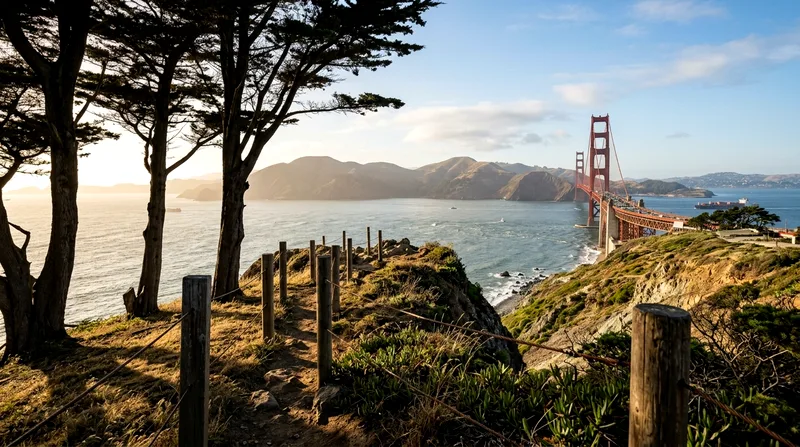
Start at the Marin Headlands, across the bridge from the city, by 7:30 a.m. in summer or 8 a.m. in fall — later sunrises in winter push this to around 7:15 a.m. Conzelman Road has three or four pullouts, each giving a slightly different angle on the bridge and skyline; the higher viewpoints near Battery Spencer are the classic postcard shot, and they're a five-minute walk from parking, not a hike. Fog is common here May through September, usually burning off by mid-morning, so morning light can be soft and diffused rather than harsh — not a bad thing for photography, just different from what Instagram preview shots suggest. Budget two hours here, including driving the short loop road to check multiple pullouts. You'll need a car or rideshare; there's no transit line that gets you here efficiently.
Afternoon & evening: Baker Beach golden hour
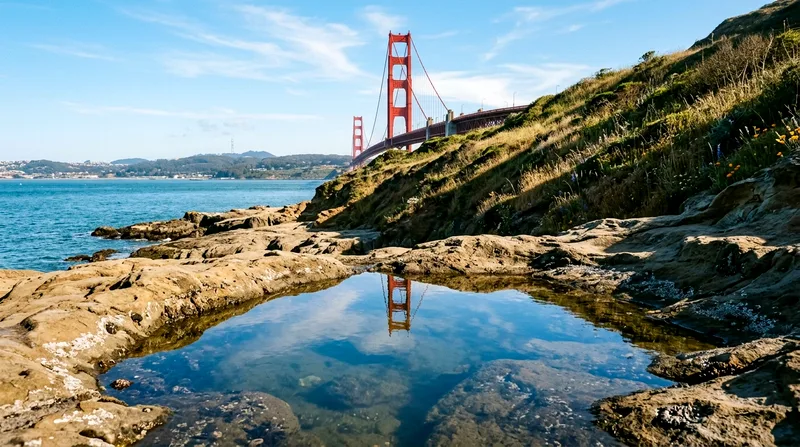
Head back across the bridge by early afternoon and rest before the main event: Baker Beach at golden hour, with the bridge framed through the trees and over the water. Arrive 45 minutes before sunset to find your spot and get oriented — the beach is long, and the clean compositions with the bridge in frame are concentrated at the north end near the parking lot. Check tide tables before you go; at high tide the sand you'd want to stand on disappears. Clothing is optional at the north end of the beach, which surprises some visitors — nothing to worry about, just know before you go. This is the one evening worth booking a guided sunset photography walk if you want help with manual settings or composition — check current prices and availability before you book, since group sizes and timing shift seasonally. If fog rolls in and kills the shot, Fort Point beneath the bridge's southern end is a solid backup with dramatic, moody compositions instead of clean golden light.
Day 2: Palace of Fine Arts & Neighborhoods
Day two trades coastal drama for architecture and street life, and it's a lighter day logistically — everything is within the city and reachable by Muni or a twenty-minute rideshare.
Morning: Palace of Fine Arts light
Get to the Palace of Fine Arts by 8 a.m., before tour groups arrive. The rotunda and colonnade face east, so morning light rakes across the columns and lights the dome from a flattering angle; by late morning the light goes flat and front-on. The reflecting pond in front gives you a mirror shot on calm mornings — windier days ripple it, which some photographers prefer for texture. This spot is flat, paved, and fully accessible, a good choice if Day 1's trails were tough on anyone in your group. Plan 45 minutes to an hour; it's a small site and you'll repeat angles after that.
Afternoon: Haight Ashbury street photography
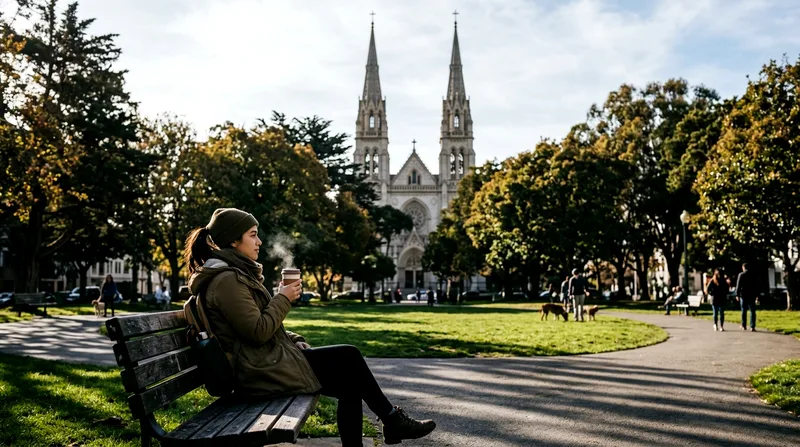
Take an early lunch, then head to Haight-Ashbury for a different kind of shooting: street photography, murals, and Victorian storefronts. The intersection of Haight and Ashbury streets itself is touristy and a little worn, but side streets like Page and Cole have better light and fewer crowds. This neighborhood rewards patience over golden hour — midday works fine here because you're shooting color and character, not landscape light. It's a good stop for solo travelers and street photographers; families with young kids may find it less engaging since there's no single "sight" to anchor the visit. Two to three hours is plenty, including a coffee break.
Day 3: Chinatown, North Beach & Underrated spots
The final day covers the oldest parts of the city, and it's the most walkable itinerary of the three — expect under two miles of total walking, mostly flat with a few hills toward North Beach.
Morning: Chinatown alleyways and markets
Arrive in Chinatown by 9 a.m., when markets are setting up but before midday crowds thicken Grant Avenue. Skip the main drag for Ross Alley and Waverly Place — narrow, lantern-strung alleyways that photograph far better than the tourist-facing main street, with less neon-sign clutter in frame. The Golden Gate Fortune Cookie Factory on Ross Alley is small, functioning, and welcomes photographers for a token donation. Morning light doesn't reach deep into these alleys until later, so expect moody, shadowed frames — bring a lens that handles low light if you're shooting with a dedicated camera rather than a phone.
Evening: Fisherman's Wharf and local secrets
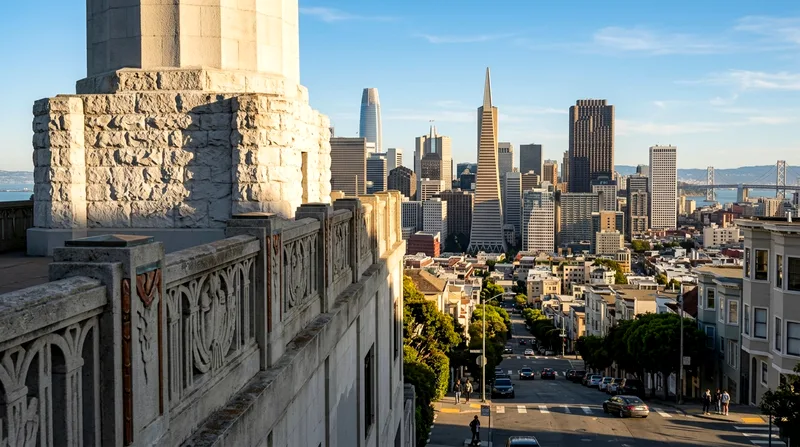
From Chinatown, walk or cable-car toward North Beach for lunch and espresso in the city's old Italian quarter, then finish at Fisherman's Wharf for late afternoon into evening. Skip the main wharf plazas, which are crowded and visually chaotic with signage — instead walk out onto Pier 7, a quiet fishing pier with a clean, uncluttered view back toward the Bay Bridge and the city skyline, a shot almost nobody posts because it's a ten-minute walk from where the tour buses stop. Sea lions at Pier 39 are worth five minutes but not more; it's a loud, crowded scene that photographs better in quick bursts than long sessions. If fog has killed your skyline shot, duck into the Musée Mécanique near Pier 45 — free entry, and the vintage arcade machines make for good low-light, high-character shots regardless of weather outside.
Getting Around San Francisco
For this itinerary, a car is genuinely useful only on Day 1 — the Marin Headlands and Baker Beach aren't well served by transit, and rideshare to the Headlands can run $25–40 each way from downtown given the bridge toll and distance. Days 2 and 3 are better without a car: parking in North Beach and Chinatown is scarce and expensive, often $6–8 per hour in garages, and traffic on Columbus Avenue at peak times erases any time you'd save driving.
Muni buses and the cable cars (the Powell-Hyde line conveniently connects Fisherman's Wharf toward downtown) cover most of this route for a single-ride fare of $3 as of 2024, or you can get a day pass if you're moving around a lot. Compared to Los Angeles, where a car is nearly mandatory for photography routes spread across 20-plus miles, San Francisco's compactness is a real advantage — you can shoot the bridge at sunrise and be in Chinatown alleys by late morning without much friction. It's also far easier to go carless here than in spread-out Seattle, where photogenic spots like Kerry Park and Pike Place sit a long drive apart.
Where to Base Yourself
Union Square or Nob Hill makes the most practical base — central, walkable to Chinatown and North Beach, and a reasonable cable car or short drive from the Marin Headlands turnoff. Expect to pay $200–350 a night at a mid-range hotel in high season (June through September), more during major conventions.
North Beach itself is a charming alternative if you want to wake up already inside Day 3's itinerary, though rooms are limited and it's noisier at night thanks to the bar scene. I'd avoid basing yourself near Fisherman's Wharf — it's convenient for exactly one day of this plan and overpriced for what you get, with mediocre dining options compared to North Beach a ten-minute walk away. Couples and honeymooners sometimes prefer the quieter, upscale feel of Pacific Heights, which also happens to be a short walk from the Palace of Fine Arts, shaving real time off Day 2's morning.
Bookable Photography Tours & Workshops
You don't need a guided tour to shoot any of this itinerary, but a guided photography tour buys you two things independent planning can't: insider timing on fog patterns and someone checking your settings before you've walked away from the shot. Platforms like GetYourGuide list several San Francisco photography tour options, and TripAdvisor is worth checking for recent traveler feedback on specific operators before booking.
Small group and private options
Small-group tours, typically four to eight people, run cheaper per person and work well for solo travelers and couples who don't need one-on-one instruction. Private sessions cost more but make sense for honeymooners wanting portraits at Baker Beach or families who want a guide working around kids' patience levels rather than a group's. Either way, confirm before booking whether the tour includes transportation to the Marin Headlands — some don't, and getting there independently adds the rideshare cost mentioned earlier.
Workshop formats and skill levels
Formats range from pure walking tours focused on locations to full workshops covering manual exposure, composition, and editing — the latter usually run three to four hours and suit beginners more than the quick two-hour location tours. If you already know your camera, a location-focused sunset or sunrise tour is more efficient than a workshop that spends an hour on settings you've already mastered. Compare current prices and group sizes before you book, since both vary by season and operator — summer fog season tours sometimes run cheaper because outcomes are less guaranteed.
Frequently asked questions
What are the best times for San Francisco photography tours?
Golden hour shifts seasonally — roughly 7:30–8:30 p.m. sunset in June and July versus 5–5:30 p.m. in December. Fog is heaviest May through September, usually clearing by mid-morning, so plan sunrise shoots with a backup indoor or sheltered location during those months.
Which neighborhoods offer the most photogenic locations?
Chinatown's alleyways, North Beach, and the Marin Headlands consistently produce the strongest shots. Haight-Ashbury and the Palace of Fine Arts round out a three-day plan well, offering architecture and street scenes without needing a car.
What do guided photography tours include?
Most include a local guide, route planning around light and crowds, and basic coaching on composition or camera settings. Transportation, especially to the Marin Headlands, isn't always included — confirm this when booking rather than assuming.
Are there private or small group photography options?
Yes — small groups of four to eight are common and cheaper per person, while private sessions suit couples or families wanting personalized pacing and instruction. Check current group sizes and prices on booking platforms before reserving.
What equipment should I bring on a photography tour?
A wide-angle lens (16–35mm equivalent) covers the bridge and Palace of Fine Arts well; a 50mm or short telephoto helps for Chinatown street shots. Bring a lightweight tripod for golden hour at Baker Beach, and a lens cloth — coastal fog leaves condensation on glass fast.