Compare San Francisco surfing lessons by location, group size, and season. Honest guidance on Ocean Beach, Pacifica, and Santa Cruz options before you book.
Who Surfing Lessons Are Right For
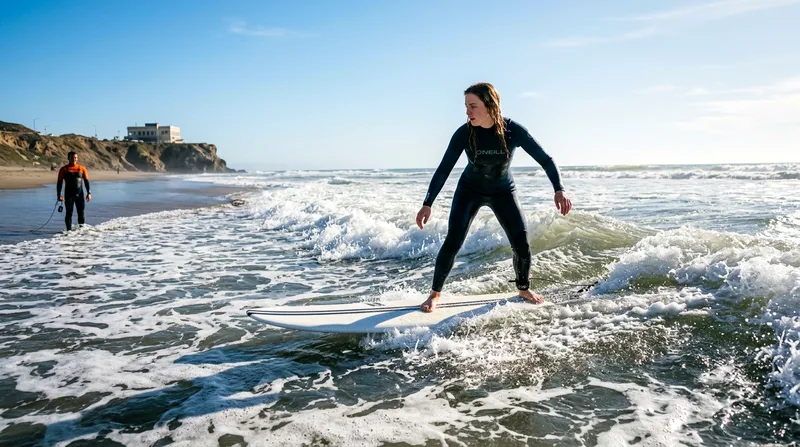
San Francisco surfing lessons work best for people who've never stood on a board and want structured, safety-first instruction rather than a rental and a prayer. The Bay Area's cold water and often unpredictable currents mean this isn't a place to freelance your first session. Lessons here are built around beach breaks with manageable whitewater, and instructors spend real time on land — ten to fifteen minutes, typically — covering paddling position, pop-up mechanics, and ocean awareness before anyone gets wet.
That said, lessons aren't only for total beginners. Plenty of operators run intermediate sessions focused on reading swell, improving pop-up speed, or transitioning from foam boards to shortboards. If you've surfed a handful of times in warmer water — Bali, Costa Rica, Southern California — a Bay Area lesson can help you adapt to colder conditions, thicker wetsuits, and punchier beach breaks without wasting a trip on frustration.
Absolute Beginners and Non-Swimmers
If you can't swim confidently, say so when booking — reputable schools will ask, and some require basic swimming ability as a condition of the lesson. Most beginner lessons use soft-top longboards (8-9 feet) for stability, and instructors stay close, often holding the board or physically helping with the push into the wave. A typical first lesson runs 90 minutes to two hours, including the land briefing, and most people stand up on whitewater at least once in that window. Don't expect to surf a green wave on day one — standing up on broken, foamy water is the actual goal, and that's a reasonable one.
Intermediate Surfers Refining Technique
For surfers who've got the basics, look for lessons explicitly marketed as intermediate or "level 2" — these typically move further out past the whitewater and focus on positioning for unbroken waves. Some schools, including smaller operations like Tommy Tsunami Surf School, offer semi-private coaching sessions aimed at this group, which tend to run longer (two to three hours) and cost more than standard beginner group lessons. If an operator only lists one generic "surf lesson" product with no mention of skill tiers, that's often a sign they're set up for first-timers only — fine if that's you, less useful if you're past that stage.
Popular Lesson Locations & Operators
"San Francisco surfing lessons" is a slightly misleading search term, because the best teaching beaches aren't technically in the city. Understanding the geography before booking saves you a confusing drive on lesson day.
Ocean Beach and Pacifica Breaks
Ocean Beach, the four-mile stretch along the city's western edge, is iconic and photogenic, but it has a reputation among local surfers for strong rip currents, sandbar-driven closeouts, and a shore break that can slam even confident swimmers. Very few schools teach true beginners there regularly, and if you find one that does, ask specifically which section of the beach they use and what the day's conditions look like.
Pacifica, about 15-20 minutes south of the city by car, is where most beginner lessons actually happen. Linda Mar Beach in Pacifica has a gentler, more consistent beach break, a wide sandy bottom, and enough room for multiple schools to run lessons simultaneously without crowding each other. Operators here include Pillar Point Surf School and Hokali Co., both of which run small-group beginner sessions, plus City Surf Project, a nonprofit that focuses on youth and community access to surfing and occasionally opens spots to visitors. If you're choosing a single location for a first lesson, Pacifica is the sensible default — it's close enough for a half-day trip from downtown SF, with none of Ocean Beach's heavier risk profile.
Santa Cruz Alternatives
Santa Cruz sits roughly 75-90 minutes south of San Francisco by car, which is too far for a quick afternoon lesson but worth considering if you're combining surfing with a Monterey Bay trip or an overnight stay. Cowell's Beach there is one of the most forgiving beginner breaks on the West Coast — mellow, slow-building waves and a longstanding surf school culture going back decades. If your itinerary already includes Monterey or the Monterey Bay Aquarium, tacking on a Santa Cruz lesson makes more geographic sense than backtracking into the city. Compared to Pacifica, Santa Cruz water runs a touch warmer in late summer, which matters more than people expect when you're spending two hours in the ocean.
Group vs Private Lessons Compared
This is the decision that affects your experience more than location does. Group lessons typically run four to eight students per instructor, last around 90 minutes to two hours, and cost less per person — generally in the lower range of what operators charge for a single session. Private lessons run one-on-one or sometimes two students to one instructor, cost noticeably more, and usually run a bit longer with more individualized correction.
Pacifica offers the most beginner-friendly conditions and the widest choice of group lessons near San Francisco, while Santa Cruz suits travelers combining surfing with a Monterey Bay trip.
San Francisco surfing lessons compared: locations, group size, and cost range
| Option | Typical Duration | Group Size | Best For | Cost Range |
|---|---|---|---|---|
| Pacifica group lesson | 1.5-2 hours | 4-8 students | First-timers, families | Lower-mid |
| Pacifica private lesson | 1.5-2.5 hours | 1-2 students | Nervous swimmers, fast progress | Higher |
| Ocean Beach lesson | 1.5-2 hours | Varies, often small | Experienced surfers only | Mid-high |
| Santa Cruz group lesson | 2 hours | 4-6 students | Beginners combining with Monterey trip | Lower-mid |
| Santa Cruz private lesson | 2 hours | 1-2 students | Personalized coaching | Higher |
Figures as of 2025; check Viator, GetYourGuide, or TripAdvisor listings for current prices, instructor ratios, and reviews before booking.
Group Lesson Benefits and Structure
Groups are social, cheaper, fine for most absolute beginners — at this stage, you need repetition and basic technique more than personalized coaching. The downside: with six or seven people sharing one instructor's attention, you'll spend real stretches of time waiting your turn or bobbing in the water between pushes. If you're traveling with a partner or as a family, booking a group lesson together as a semi-private block (some schools allow this) splits the difference nicely.
Private Lesson Advantages
Private lessons make the most sense for nervous swimmers, people with physical limitations, or anyone who's tried a group lesson before and felt lost in the shuffle. You get continuous feedback on your pop-up and paddling, the instructor can adjust the plan in real time based on conditions, and you'll typically catch more waves per hour than in a group. The trade-off is cost — private sessions often run close to double or more what a group spot costs — and for a true first-timer, that premium doesn't always translate to faster progress, since standing up on a board has as much to do with repetition as instruction quality.
What to Look for When Booking
Before you book anything through Viator, GetYourGuide, or directly with a local school, read the actual lesson description, not just the headline. Listings labeled simply "San Francisco surf lesson" sometimes mean the pickup point is in the city while the lesson itself happens in Pacifica — that's normal, but confirm the exact beach.
Inclusions: Equipment, Wetsuit, Duration
A standard beginner booking should include a soft-top board, a full wetsuit (4/3mm or thicker — more on that below), and sometimes booties, given how cold the water gets. Confirm whether rash guards or wetsuit tops are washed between uses, since this matters more than people think for hygiene, and ask whether the listed duration includes the land briefing or just water time. Some operators pad the "two-hour lesson" figure with changing and gear-up time, so your actual surfing window might be closer to 60-75 minutes.
Group Size and Instructor Ratios
Ask directly: how many students per instructor, and is that a hard cap or a target? A ratio of four or five to one is reasonable for beginners; anything above seven or eight means long waits between waves. Reviews on TripAdvisor often mention this specifically — scan recent ones for comments about overcrowding or rushed instruction rather than relying on the overall star rating alone.
Cancellation Policies and Refunds
Bay Area surf conditions change fast, and a reputable operator will have a clear weather-cancellation policy — usually free rescheduling if waves or wind make a session unsafe, decided the morning of or the night before. Be wary of any listing with no visible cancellation terms or only a rigid no-refund policy; that's a sign of a less flexible operation, and in a region where fog and wind can shut down a session with little notice, flexibility matters more than it would somewhere like Southern California.
Best Seasons & Timing for Lessons
Timing a San Francisco surfing lesson well changes the whole experience — wave size, water temperature, and crowd levels all shift noticeably across the year, and this region doesn't follow the same calendar as Southern California or Hawaii.
Wave Conditions by Season
Late summer through early fall — roughly August through October — generally brings the calmest, most consistent beginner conditions at Pacifica and Santa Cruz, with smaller swells and lighter wind. Winter (November through March) sees larger, more powerful swells generated by North Pacific storms; experienced surfers chase this season, but it's generally a poor time for first lessons unless an instructor specifically picks a sheltered day. Spring tends to be transitional and windier, which can mean choppier, less organized waves for learning.
Water Temperature and Wetsuit Needs
Water temperatures around San Francisco and Pacifica run roughly 52-58°F (11-14°C) year-round — there's no real "warm season" the way there is in Southern California. A 4/3mm or 5/4mm full wetsuit with booties and a hood (in winter) is standard, and nearly every operator includes this in the lesson price. If you're sensitive to cold, consider a shorter session or ask about hood and glove add-ons — some schools stock them, some don't, so confirm this before the day of your lesson rather than discovering it on the beach.
Frequently asked questions
Where can I take surfing lessons as a beginner in San Francisco?
Most reputable beginner lessons happen in Pacifica, about 15-20 minutes south of the city, at Linda Mar Beach — not at Ocean Beach itself, which has stronger currents and is less forgiving for first-timers. Operators like Pillar Point Surf School and Hokali Co. run regular group sessions there. If you want an alternative further afield, Santa Cruz (75-90 minutes away) offers equally gentle conditions at Cowell's Beach.
How much do San Francisco surfing lessons cost?
Group lessons generally cost less per person than private sessions, with private lessons often running close to double. Exact pricing varies by operator, season, and group size, so compare current listings on Viator, GetYourGuide, or directly with local schools before booking rather than relying on older published figures.
What is included in a typical surf lesson?
Standard inclusions are a soft-top longboard, a full wetsuit (usually 4/3mm or thicker), and sometimes booties. Land instruction covering paddling and pop-up technique typically takes 10-15 minutes before you enter the water, and total session length runs 90 minutes to two hours including that briefing.
What is the best time of year for surf lessons in the Bay Area?
Late summer into early fall (roughly August to October) offers the calmest swells and lightest wind, making it the most reliable window for beginners. Winter brings bigger, more powerful waves better suited to experienced surfers, and spring tends to be windier and less consistent for learning.
Do I need my own wetsuit for a lesson?
No — nearly every operator includes a wetsuit in the lesson price, since year-round water temperatures of roughly 52-58°F require at least a 4/3mm suit. If you have cold sensitivity, ask in advance about hoods, gloves, or thicker suits, as not every school stocks these as standard add-ons.