A San Francisco farmers market guide to Ferry Building, Alemany, Fillmore and Fort Mason — hours, vendors, transit tips, and nearby food tours.
Ferry Plaza Farmers Market: The City's Premier Destination
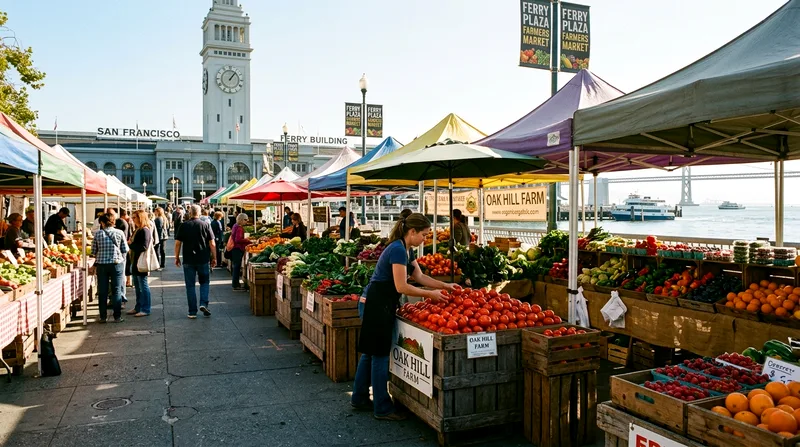
Any San Francisco farmers market guide has to start here, because Ferry Plaza is the one most visitors stumble into without planning to — and the one locals still show up for every week regardless. Run by the nonprofit Foodwise (formerly CUESA), it sits right outside the Ferry Building Marketplace on the Embarcadero, which means you get two food destinations for the price of one trip. The market itself spreads across the plaza and wraps around the building's bayside, with the Ferry Building's year-round shops — cheese counters, an oyster bar, a mushroom specialist — open on the same schedule.
I'd call it the best all-around market in the city, but not the best value. Prices run higher than Alemany's, and on Saturday mornings the crowds thicken enough that photographers chasing an empty-stall shot should arrive before 9am. What it does better than anywhere else is variety: specialty produce growers from the Central Valley and the Delta, prepared-food stalls selling everything from Dungeness crab rolls to Burmese tea leaf salad, and a reliable rotation of live music near the water side. Compare it to Pike Place in Seattle or the Original Farmers Market in LA, and Ferry Plaza feels less touristy and more genuinely tied to Northern California's growing regions — most vendors are farmers themselves, not resellers.
Location and iconic views
The market sits at One Ferry Building, at the foot of Market Street on the Embarcadero, with open water and the Bay Bridge directly behind the stalls — this is the shot you've probably seen on Instagram without realizing where it was taken. It's a flat, five-minute walk from the Financial District and an easy stop if you're already riding a ferry to Sausalito or Oakland, since the terminal is inside the same building. Couples on a half-day Embarcadero walk often pair the market with a stroll toward Pier 39, about 20 minutes on foot north along the waterfront.
Year-round hours and peak seasons
Ferry Plaza runs year-round on Tuesdays and Saturdays, with Tuesday a smaller, quieter version of the Saturday market — better if you dislike crowds but want the same baseline of produce and prepared food. Saturday hours generally run morning into early afternoon, and the market operates through winter, though the stall count thins out from December through February. Peak season is roughly June through October, when stone fruit, tomatoes, and corn fill multiple stalls at once. If you're visiting in January and expecting summer abundance, you'll be disappointed — this is a genuine seasonal market, not a year-round produce supermarket dressed up as one.
Markets by Neighborhood and Day of Week
Beyond Ferry Plaza, San Francisco runs a genuinely dense calendar of neighborhood markets, and this is where the city separates itself from somewhere like San Diego or Monterey, which tend to have one or two signature markets and little else. If you're staying a full week, you can realistically hit a different market every day without repeating a neighborhood.
Ferry Plaza is the best all-rounder, but Alemany is cheaper and Fort Mason is calmer — pick based on crowd tolerance and transit access.
San Francisco farmers markets by day, location, and best use
| Market | Day(s) | Neighborhood | Best For | Transit Access |
|---|---|---|---|---|
| Ferry Plaza Farmers Market | Tue & Sat | Embarcadero | First-time visitors, variety, views | Excellent (BART, Muni, ferry) |
| Alemany Farmers Market | Sat | Bernal Heights/Alemany | Value, authenticity, bulk produce | Limited (bus only) |
| Fillmore Farmers Market | Sat | Fillmore/Japantown | Local, low-key browsing | Good (Muni bus) |
| Fort Mason Center Farmers Market | Sun | Marina District | Families, bay views, easy parking | Moderate (Muni bus, long walk from BART) |
Schedules as of 2024; always confirm current hours before visiting, as seasonal adjustments and holiday closures occur.
Downtown and waterfront markets
Fort Mason Center Farmers Market, held Sundays near the Marina, trades the Ferry Building's polish for a more residential, dog-walking crowd — it's smaller, parking is easier, and the bay views toward Alcatraz are arguably better than anything downtown offers. It's a good pick for families staying near the Marina or Presidio who don't want to deal with Embarcadero traffic. Downtown itself doesn't have much beyond Ferry Plaza, which honestly is the point — the city concentrated its flagship market there rather than spreading resources thin across the Financial District.
Mission, Fillmore, and neighborhood options
The Fillmore Farmers Market runs Saturdays in the Fillmore district and leans smaller and more community-focused — fewer prepared-food stalls, more straightforward produce and baked goods, with a crowd that's mostly neighborhood regulars rather than tourists. It's worth a visit if you want to see a market that hasn't been built around visitor foot traffic at all. The Alemany Farmers Market, open Saturdays near the Alemany Farmers Market Shed off the 101 and 280 interchange, is the oldest continuously operating farmers market in California, and it shows — lower prices, cash-heavy stalls, produce still dusty from the field, and almost no English-language signage pandering to tourists. It's less convenient to reach without a car, but if you want to see how the city actually eats rather than how it markets itself to visitors, Alemany beats Ferry Plaza on authenticity every time.
What to Buy: Seasonal Produce and Vendor Specialties
California's growing regions feed San Francisco's markets almost entirely — Central Valley, Salinas Valley, and the Delta are within a few hours' drive, so what you see on the table was likely picked within 48 hours. That immediacy is the real selling point over a city like Las Vegas, where "farmers market" produce often traveled much farther. California Farmers Markets as a category benefit from a growing season that barely pauses, which is why SF's stalls never go fully empty even in the dead of winter.
Spring and summer abundance
Spring brings asparagus, strawberries starting around April, and the first stone fruit — cherries typically show up by May. Summer, from June through September, is when the markets peak: heirloom tomatoes, peaches, nectarines, corn, and a stretch of stalls selling nothing but melons. This is also prime season for prepared-food vendors, since outdoor seating at Ferry Plaza and Fort Mason gets genuinely pleasant rather than fog-chilled. If you're a wine lover visiting in late summer, pair a market trip with a day up in Napa Valley — the same stone fruit you're eating at Ferry Plaza is what's going into the dessert wines up there.
Fall and winter offerings
Fall shifts toward apples, winter squash, and the start of citrus season — Meyer lemons and mandarins from the Central Valley show up by November. Winter is mushroom season in Northern California, and you'll see a noticeably wider selection of wild and cultivated varieties than in summer. Don't expect tomatoes or berries in January; vendors who sell them anyway are usually trucking them in from further south, and the quality drop is obvious once you taste it.
Getting There: Hours, Transit, and Parking
Each market sits in a different part of the city, so your transit plan really depends on which one you're targeting — this isn't a one-size-fits-all answer, and that's a fair trade-off for the variety on offer.
Public transportation and accessibility
Ferry Plaza is the easiest market in the city to reach without a car — the Embarcadero BART/Muni station is a two-minute walk, and several Muni bus lines stop within a block. Fort Mason requires a bus ride (Muni's 30 or 49 line gets you close, then a short walk) since no rail line serves the Marina directly. Fillmore is reachable by bus along Fillmore Street. Alemany is the outlier: it sits near a freeway interchange with no BART access, so you're relying on Muni buses with a longer walk, which is part of why it stays less crowded with out-of-town visitors.
Parking options by location
If you're driving, Ferry Plaza has the worst parking situation of the four — downtown garage rates apply, and Saturday traffic along the Embarcadero can eat 20 minutes just finding a spot. Alemany, by contrast, has a large dedicated lot on-site and is genuinely easier to drive to than to reach by transit. Fort Mason has reasonable free and metered street parking near the Marina Green, and Fillmore has standard metered street parking that fills up but turns over quickly. My honest advice: take transit to Ferry Plaza, drive to Alemany.
Extend Your Visit: Cooking Classes and Food Tours
A farmers market visit works well as the anchor of a half-day food itinerary rather than a standalone stop, and San Francisco has built enough infrastructure around its markets — cooking classes, guided tastings, walking food tours — that it's genuinely one of the better American cities for this kind of thing, ahead of Portland and comparable to what you'd find in parts of Napa Valley.
Market-based culinary experiences
Some cooking schools near the Ferry Building run classes that start with a short market walk-through before moving into a kitchen for a hands-on session — a useful option for couples or families who want more structure than wandering stalls alone. These typically run two to three hours and usually require advance booking, especially on Saturdays when demand peaks alongside the market crowds. If you're traveling with kids, ask specifically whether a class is family-friendly before booking, since some are adults-only or involve knife work unsuitable for younger children.
Booking nearby food tours
Walking food tours that include the Ferry Building and surrounding Embarcadero are widely available and usually run two to four hours, mixing market tastings with stops at nearby restaurants or specialty shops. These are worth it mainly for solo travelers and visitors from Europe who want context — a guide explaining what Dungeness crab season means, or why sourdough culture matters in SF, adds real value you won't get browsing alone. Compare current food tours and prices before you book, since offerings and start times change seasonally, and check whether the tour includes tastings or just commentary — that distinction affects value more than anything else.
Frequently asked questions
What is the best farmers market in San Francisco?
Ferry Plaza Farmers Market is the best overall for variety, views, and ease of access — it's the one SF Travel and most guides point to first. But for value and an unfiltered look at how locals shop, Alemany Farmers Market is arguably better, just harder to reach without a car.
What days are farmers markets open in San Francisco?
Ferry Plaza runs Tuesdays and Saturdays year-round. Alemany and Fillmore operate Saturdays. Fort Mason Center Farmers Market runs Sundays. Together they cover four days a week across different neighborhoods, so you can plan around almost any schedule.
Where is Ferry Plaza Farmers Market located?
It's at One Ferry Building on the Embarcadero, at the foot of Market Street, right outside the Ferry Building Marketplace. It's a two-minute walk from the Embarcadero BART/Muni station, making it the most transit-accessible market in the city.
What can you buy at San Francisco farmers markets?
Seasonal produce from Central Valley and Delta farms, artisan bread and cheese, fresh seafood, specialty mushrooms, flowers, and a wide range of prepared foods — tamales, dumplings, crab rolls, pastries — depending on the market and day.
Are farmers markets open year-round in San Francisco?
Ferry Plaza operates year-round, though stall counts shrink in winter. Alemany, Fillmore, and Fort Mason also run through the colder months, but expect less produce variety between December and February compared to the summer peak.